

Table of Contents
Introduction to Vince Zampella
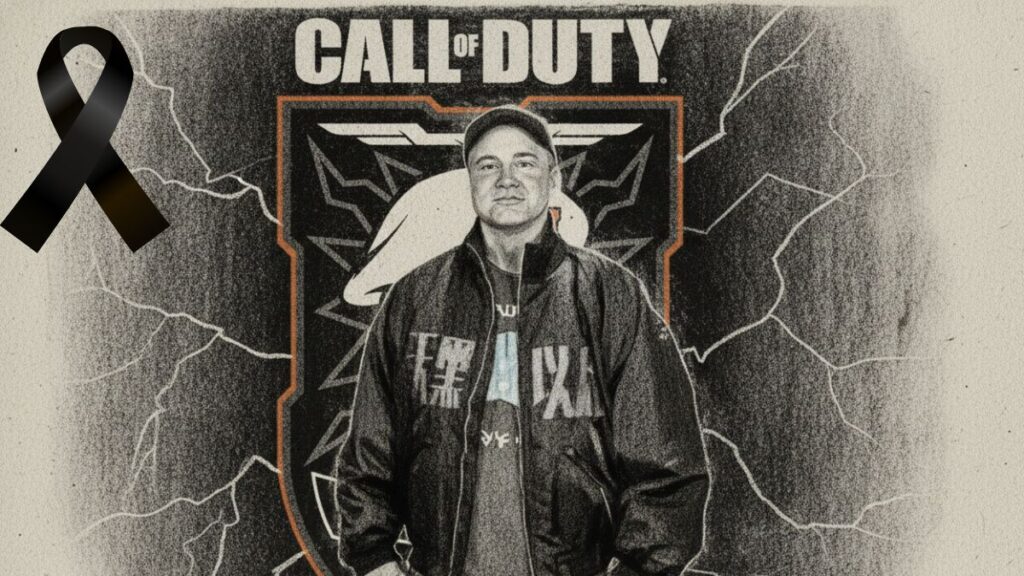
In the pantheon of video game development, few names carry as much weight as Vince Zampella. As a co-founder of two of the most influential studios in history—Infinity Ward and Respawn Entertainment—Zampella has effectively redefined the first-person shooter (FPS) genre not once, but three times. From the cinematic intensity of Call of Duty to the high-octane mobility of Titanfall and the tactical brilliance of Apex Legends, his fingerprints are all over the DNA of modern interactive entertainment.
Vince Zampella is more than just a studio head; he is a creative catalyst. Known for his “gameplay-first” philosophy, he has a preternatural ability to understand what makes a game “feel” right. This “feel”—often described by developers as the “Zampella touch”—revolves around snappy controls, high frame rates, and a rhythmic combat loop that keeps players engaged for thousands of hours. Today, as a high-ranking executive at Electronic Arts (EA), he oversees some of the world’s most valuable gaming intellectual properties, including the Battlefield franchise.
The importance of Zampella’s influence cannot be overstated. He transitioned the industry from the era of “Quake-clones” to the era of cinematic military shooters, and later pioneered the movement-heavy mechanics that define modern battle royales. This article explores the life, the legal battles, the creative triumphs, and the enduring legacy of the man who built the modern shooter.
Early Life and Education
While much of Vince Zampella’s public persona is tied to his professional achievements, his roots provide a glimpse into the work ethic that fueled his rise. Born in 1970, Zampella grew up during the foundational years of the video game industry. Like many of his peers, his early interest in technology was sparked by the burgeoning arcade scene and the arrival of early home consoles like the Atari 2600.
Childhood and Early Interests
Zampella was part of the generation that witnessed the transition from analog to digital. His fascination wasn’t just with playing games, but with the mechanics behind them. While he wasn’t a “coding prodigy” in the traditional sense, he possessed a keen analytical mind for system design and competition. This competitive drive would later manifest in his insistence on high-performance multiplayer environments.
Education Background
Zampella attended college in the late 1980s and early 1990s, a period when “Game Design” wasn’t a standard degree program. He focused on business and technology, providing him with a dual perspective that many purely creative directors lack. This balanced background allowed him to navigate the complex corporate waters of Activision and EA later in his career, understanding both the creative needs of a development team and the fiscal demands of a multi-billion-dollar publisher.
Entry into the Gaming Industry
Vince Zampella did not start at the top. His journey began in the trenches of the 1990s gaming industry, a volatile period marked by rapid technological shifts and the rise of the CD-ROM.
Early Career and First Projects
His first major steps into the industry were at companies like GameTek and Panasonic Interactive. In these early roles, he worked on a variety of titles that were far removed from the high-budget shooters he would eventually lead. At GameTek, he was involved in titles like Jeopardy! and Wheel of Fortune. While these weren’t blockbuster action games, they taught him the fundamentals of project management, QA (Quality Assurance), and the importance of a polished user experience.
During the mid-90s, the industry was shifting toward 3D graphics. Zampella recognized early on that the future of the medium lay in immersive, three-dimensional worlds. This realization led him to seek out more ambitious projects, eventually landing him at 22nd Century Productions, where he began to hone his skills in production and studio operations.
Infinity Ward and the Birth of Call of Duty
The true turning point in Zampella’s career came when he joined 2015, Inc. It was here that he, along with Jason West and a core group of developers, created Medal of Honor: Allied Assault for Electronic Arts. The game was a massive critical and commercial success, praised for its cinematic “D-Day” landing sequence. However, friction with 2015’s management led Zampella and West to strike out on their own.
Formation of Infinity Ward
In 2002, Zampella and West co-founded Infinity Ward. Seeking independence but requiring capital, they secured funding from Activision, which eventually acquired the studio. The mission was simple: create a “Medal of Honor killer.”
Development of Call of Duty
The result was Call of Duty (2003). While Medal of Honor focused on a lone-wolf hero, Call of Duty emphasized the perspective of multiple soldiers across different fronts of World War II. It introduced the concept of “squad-based” cinematic action, where the player felt like a small part of a massive machine.
Success and Industry Recognition
The success of the first Call of Duty was instantaneous. It won numerous Game of the Year awards and established Infinity Ward as a premiere developer. However, Zampella wasn’t content with just iterating on World War II. In 2007, he led the team to create Call of Duty 4: Modern Warfare.
| Feature | Impact of Modern Warfare (2007) |
| Setting | Shifted the industry from WWII to contemporary global conflicts. |
| Multiplayer | Introduced the “Perk” and “Killstreak” systems now standard in shooters. |
| Performance | Maintained a rock-solid 60 frames per second on consoles. |
| Narrative | Used a non-linear, high-stakes cinematic storytelling style. |
Modern Warfare became a cultural phenomenon, selling millions of copies and cementing Call of Duty as a global brand. Zampella had successfully changed the landscape of gaming forever.
Conflict with Activision and Legal Battle
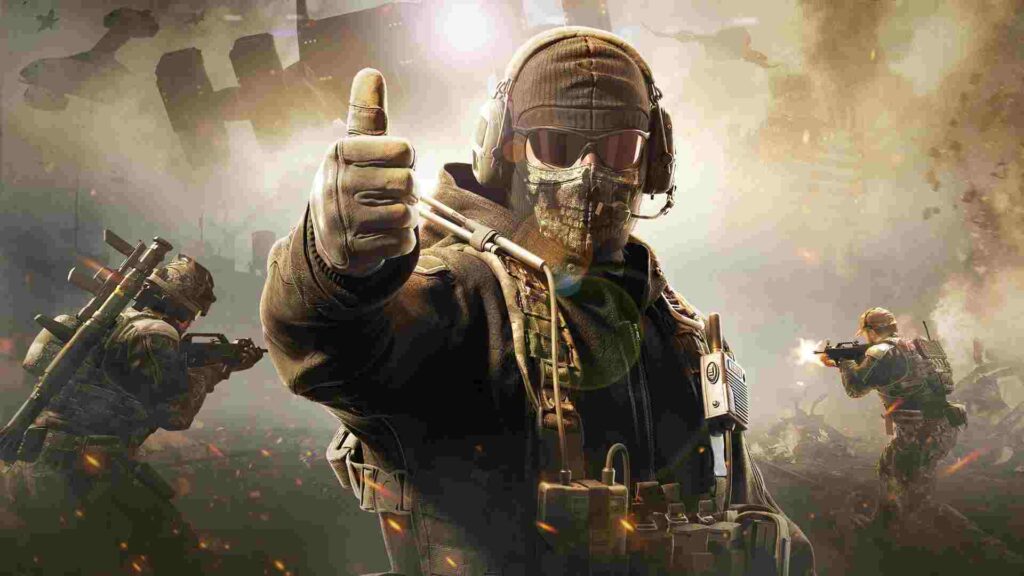
In 2010, at the height of their success following the release of Modern Warfare 2, the gaming world was shocked when Activision abruptly fired Vince Zampella and Jason West.
Reasons Behind the Dispute
Activision alleged “insubordination” and “breach of contract,” claiming that Zampella and West were meeting with competitors (specifically EA) while still under contract. Zampella and West countered with a massive lawsuit, claiming that Activision fired them to avoid paying hundreds of millions of dollars in royalties generated by Modern Warfare 2.
Legal Issues Explained
The legal battle was messy and highly publicized. Internal Activision memos surfaced with titles like “Project Icebreaker,” detailing efforts to dig up dirt on the two founders. The dispute wasn’t just about money; it was about the rights to the Call of Duty brand and the creative freedom of the developers.
Ultimately, the case was settled out of court in 2012. While the terms were confidential, the outcome allowed Zampella to move forward and signaled the end of his era at Activision. The “Great Exodus” followed, where dozens of core Infinity Ward employees quit to join Zampella at his new venture.
Formation of Respawn Entertainment
In the wake of the firing, Zampella and West didn’t wait long to rebuild. In April 2010, they announced the formation of Respawn Entertainment.
Partnership with Jason West
The partnership between Zampella (the producer/business visionary) and West (the creative/technical lead) was the engine that drove their success. However, by 2013, Jason West retired from the industry for personal reasons, leaving Zampella as the sole head of Respawn. This was a pivotal moment; Zampella had to prove he could lead a world-class studio on his own.
Vision and Goals of the Studio
Respawn’s philosophy was “freedom through excellence.” By partnering with EA through the “EA Partners” program (and later being fully acquired by EA), Zampella ensured that his team had the resources of a giant publisher while maintaining the creative soul of an indie studio.
Titanfall Series – Innovation in FPS
Respawn’s debut title, Titanfall (2014), was a bold departure from the boots-on-the-ground realism of Call of Duty.
Titanfall (2014)
Titanfall introduced a “vertical” style of gameplay. Players, known as Pilots, could wall-run, double-jump, and eventually summon massive mechanized “Titans” from orbit. The game was an Xbox and PC exclusive, and while it lacked a traditional single-player campaign, its mechanics were hailed as a breath of fresh air in a stagnant genre.
Titanfall 2
Released in 2016, Titanfall 2 corrected the flaws of its predecessor by including one of the most celebrated single-player campaigns in FPS history. The relationship between the protagonist, Jack Cooper, and his Titan, BT-7274, added an emotional core to the frenetic action.
Despite being sandwiched between the releases of Battlefield 1 and Call of Duty: Infinite Warfare, Titanfall 2 became a cult classic. Its “Effect and Cause” level, which allows players to swap between two time periods instantly, is still cited as a masterclass in level design.
Apex Legends – A Battle Royale Revolution
By 2019, the Battle Royale genre was dominated by Fortnite and PUBG. Many assumed Respawn was working on Titanfall 3. Instead, they released Apex Legends.
Surprise Launch Strategy
In a move of pure marketing brilliance, Zampella and his team “shadow-dropped” Apex Legends on February 4, 2019. There was no prior marketing, no trailers, and no leaks. Within 24 hours, the game had 2.5 million players. Within a month, it had 50 million.
Esports and Long-Term Success
Apex Legends succeeded because it combined the hero-shooter elements of Overwatch with the refined movement mechanics of Titanfall. It also introduced the “Ping System,” a revolutionary communication tool that allowed players to coordinate without using voice chat—a feature so effective it was immediately copied by almost every other shooter on the market.
Vince Zampella at Electronic Arts (EA)
Following the success of Apex Legends and the critical acclaim of Star Wars Jedi: Fallen Order (another Respawn project Zampella greenlit), EA recognized Zampella’s leadership potential.
Leadership Role at EA
In 2020, Zampella was tasked with overseeing not just Respawn, but also DICE LA (later rebranded as Ripple Effect Studios). His role expanded from a studio head to a “super-producer,” overseeing a massive portion of EA’s action portfolio.
Overseeing Multiple Franchises
Under his watch, Respawn expanded into multiple teams:
- The Apex Legends live-service team.
- The Star Wars Jedi team (led by Stig Asmussen).
- A new dedicated FPS team.
- The Battlefield support and direction team.
Role in Battlefield Franchise Revival
After the rocky launch of Battlefield 2042, EA turned to the man who had never missed: Vince Zampella. In late 2021, he was officially put in charge of the entire Battlefield franchise.
Battlefield Leadership Changes
Zampella’s arrival signaled a shift in strategy. He brought in industry veterans and restructured the way Battlefield games are developed, moving toward a “connected universe” approach where multiple studios contribute to different aspects of the game (single-player, multiplayer, and live service).
Zampella’s Vision for Battlefield’s Future
While the next Battlefield is still in development, Zampella has hinted at a return to the “core” values of the franchise—destructible environments, class-based gameplay, and the “only in Battlefield” moments that defined Battlefield 3 and 4. His involvement has given the community renewed hope for a franchise that was once considered in decline.
Leadership Style and Creative Philosophy
What makes Vince Zampella different from other executives? It boils down to his philosophy of “Iterate Until It’s Fun.”
How Vince Zampella Manages Teams
Zampella is known for maintaining a relatively flat hierarchy. He trusts his creative leads and doesn’t micro-manage their artistic vision. However, he is famously ruthless when it comes to “the feel.” If a gun doesn’t sound right or a jump feels “floaty,” he will insist on rework until it meets his standards.
His Approach to Innovation and Risk-Taking
Zampella is a calculated risk-taker. Shadow-dropping Apex Legends was a massive gamble that could have failed. Developing a single-player Star Wars game with no microtransactions (Fallen Order) went against the prevailing industry trends of 2019. In both cases, Zampella’s intuition for what players actually wanted—rather than what market research suggested—paid off.
Awards, Achievements, and Industry Recognition
Zampella’s trophy cabinet is overflowing. His impact has been recognized by nearly every major gaming organization.
- Academy of Interactive Arts & Sciences (AIAS): Inducted into the Hall of Fame.
- The Game Awards: Multiple wins for Best Action Game, Best Multiplayer, and Studio of the Year.
- BAFTA Games Awards: Multiple nominations and wins for technical achievement.
- GDC (Game Developers Choice Awards): Lifetime achievement recognition.
Net Worth and Business Influence
As of 2024, Vince Zampella’s estimated net worth is in the range of $50 million to $100 million. Much of this wealth comes from the acquisition of Respawn by EA for approximately $455 million in 2017, plus performance-based bonuses.
Beyond his personal wealth, his business influence is seen in the way studios are now structured. He proved that a talent-heavy, medium-sized studio could outperform massive, multi-thousand-person studios by focusing on efficiency and high-quality gameplay loops.
Vince Zampella’s Impact on the Gaming Industry
To understand Zampella’s impact, one must look at the “Before and After” of the FPS genre.
Influence on FPS Mechanics
- The 60FPS Standard: Before Modern Warfare, many console shooters were content with 30fps. Zampella proved that 60fps was essential for competitive feel.
- Mobility: Titanfall popularized wall-running and double-jumping, mechanics that were later adopted (with varying degrees of success) by Call of Duty and Halo.
- Progression Systems: The “Level up to unlock new guns” loop that dominates modern gaming was perfected under his watch at Infinity Ward.
Legacy in Multiplayer and Live-Service Games
Zampella helped transition the industry from “one-and-done” releases to the live-service model. However, unlike many of his contemporaries, he has maintained a focus on player fairness and high-value content updates, ensuring that Apex Legends remains relevant years after its launch.
Future Projects and What’s Next
The future of Vince Zampella is inextricably linked with the future of EA.
- The Next Battlefield: This is his primary focus. He aims to restore the franchise to its former glory as the premier large-scale military shooter.
- Star Wars Projects: While he has stepped back from direct production, he continues to oversee the direction of the Star Wars Jedi series and other unannounced Lucasfilm collaborations.
- New IP: Rumors persist that Respawn is working on a brand-new intellectual property that is not related to Titanfall or Apex.
Conclusion
Vince Zampella is a rare figure in the gaming industry—a leader who has successfully bridged the gap between the “wild west” era of early 2000s development and the corporate, multi-billion-dollar landscape of today. His career is a testament to the power of focusing on the fundamentals: if a game is fun to play and feels good in the player’s hands, success will follow.
From the trenches of World War II to the far reaches of the Frontier and the galaxy far, far away, Zampella has given us the worlds we play in and the mechanics we master. He remains the most influential architect of the modern shooter, and his journey is far from over.
Frequently Asked Questions (FAQs)
Who is Vince Zampella?
Vince Zampella is a prominent American video game developer, co-founder of Infinity Ward and Respawn Entertainment, and a current executive at Electronic Arts. He is best known for creating the Call of Duty and Titanfall franchises.
What games did Vince Zampella create?
Zampella was a key figure in the creation of Medal of Honor: Allied Assault, Call of Duty 1, 2, and 4 (Modern Warfare), Titanfall 1 & 2, Apex Legends, and Star Wars Jedi: Fallen Order.
Is Vince Zampella still working with EA?
Yes, Zampella is currently the Head of Respawn Entertainment and also oversees the Battlefield franchise and Ripple Effect Studios within Electronic Arts.
What is Vince Zampella famous for?
He is famous for redefining the FPS genre twice: first with the cinematic military shooter (Call of Duty) and second with high-mobility shooters and battle royales (Titanfall and Apex Legends). He is also known for his high-profile legal battle with Activision.
What is Vince Zampella’s leadership style?
His style is often described as “developer-first.” He prioritizes gameplay “feel” and snappy mechanics over all else, trusting his creative leads while maintaining a high bar for technical performance (like 60fps).
How did Apex Legends change battle royale games?
Apex Legends introduced the “Ping System” for non-verbal communication, hero-based abilities in a battle royale setting, and a “respawn” mechanic (the Respawn Beacon) that allowed dead players to return to the game—all of which became industry standards.
What is Vince Zampella’s role in Battlefield?
He is the franchise lead for Battlefield. He oversees the long-term strategy and creative direction for the series, working with multiple studios like DICE, Ripple Effect, and Criterion to revitalize the brand.
What is Vince Zampella’s estimated net worth?
His net worth is estimated to be between $50 million and $100 million, primarily following the sale of Respawn Entertainment to EA.
Vince Zampella’s career proves that in the ever-changing world of technology, the most valuable asset is a clear vision of what makes us enjoy playing games. As he looks toward the future of Battlefield and beyond, the industry watches with bated breath, knowing that wherever Zampella goes, innovation is sure to follow.

