
Table of Contents
The dream of instant, generational wealth has a name that resonates across continents: Powerball. From its humble beginnings as a regional multi-state game to its current status as a multi-billion dollar cultural phenomenon, Powerball has redefined the limits of the lottery industry. Whether you are a casual player buying a ticket when the jackpot hits the news or a dedicated strategist analyzing frequency charts, understanding the mechanics, history, and reality of this game is essential.
In this comprehensive guide, we will dive deep into every facet of Powerball. From the technical breakdown of the drawing process to the complex tax implications of a billion-dollar win, this is the ultimate resource for the world’s most famous lottery.
Introduction to Powerball
What is Powerball?
Powerball is an American multi-jurisdictional lottery game offered by 45 states, the District of Columbia, Puerto Rico, and the U.S. Virgin Islands.1 It is coordinated by the Multi-State Lottery Association (MUSL), a non-profit organization formed by an agreement with various U.S. lotteries.2+1
At its core, is a “draw game.” Unlike scratch-offs that provide immediate results, Powerball players wait for a live drawing to see if their selected numbers match those drawn from two separate drums.3 The game’s structure is designed to produce massive, rolling jackpots that capture the public’s imagination when they reach heights that exceed the GDP of small nations.
Why Powerball is the Most Popular Lottery in the World
While many countries have their own national lotteries, Powerball remains the global benchmark for several reasons:
- The “Rollover” Effect: Unlike some lotteries that have prize caps, Powerball jackpots can grow indefinitely until someone wins.4 This creates “Lottery Fever,” where ticket sales spike exponentially as the jackpot climbs.
- Accessibility: Even though it is a U.S.-based game, the rise of online lottery messenger services has allowed players from Europe, Asia, and South America to participate.
- Low Barrier to Entry: For just $2.00, anyone of legal age can buy a chance to change their life forever.
- Cultural Impact: Powerball is more than a game; it is a shared social event. When the jackpot exceeds $1 billion, it becomes a primary topic of conversation in offices, coffee shops, and across social media platforms worldwide.
Overview of Massive Jackpots
Powerball is synonymous with the word “billion.” In recent years, the game has undergone structural changes specifically designed to make the jackpot harder to win, which in turn causes the prize pool to swell to record-breaking levels.
- In November 2022, Powerball set the world record for the largest lottery jackpot ever: $2.04 billion, won by a single ticket holder in California.5
- As of late 2025, the game continues to see frequent “billion-dollar seasons,” where jackpots regularly cross the ten-figure mark, fueled by increased ticket prices and the addition of a third weekly drawing.6
History of Powerball
Origin of Powerball
The story of Powerball begins not with the name we know today, but with a game called Lotto America. Launched in 1988, Lotto America was the first attempt by the MUSL to create a game that pooled the resources of multiple states to offer larger prizes than a single state could provide on its own.7
On April 19, 1992, Lotto America was officially rebranded as Powerball.8 The first drawing took place just three days later, on April 22.9 The launch was revolutionary because it was the first game to use the “two-drum” system.10 This innovation allowed for two distinct sets of odds: one for the high-tier jackpot and another for lower-tier prizes, making it possible for players to win something even if they didn’t hit the “big one.”11+2
Evolution Over the Years
Since 1992, Powerball has expanded its footprint significantly.12 Originally played in only 15 states, it grew through the 1990s and 2000s. A pivotal moment occurred in 2010, when a cross-selling agreement was reached between the MUSL and the Mega Millions consortium.13 This allowed states to offer both Powerball and Mega Millions tickets, effectively unifying the U.S. lottery market.+1
Major Rule Changes
To keep the game exciting and ensure the jackpots continued to grow, the MUSL has implemented several key rule changes over the decades:
- 1997: The annuity was changed from 20 to 25 years (later to 30), and a cash option was introduced.14
- 2001: The Power Play multiplier was added, giving players a way to increase non-jackpot prizes for an extra $1.15
- 2012: The ticket price was increased from $1 to $2. This move doubled the starting jackpot and accelerated the rate at which the prize pool grew.16
- 2015: The matrix changed to the current 5/69 + 1/26 format.17 This change slightly improved the odds of winning any prize while significantly lengthening the odds of winning the jackpot, which successfully triggered the era of billion-dollar prizes.
- 2021: A Monday drawing was added to the existing Wednesday and Saturday schedule, increasing the number of drawings per week to three.18
How Powerball Became a Global Phenomenon
The transition from a domestic game to a global brand was driven by the internet. In the early 2010s, “Lottery Messenger” websites began to appear. these services involve agents in the U.S. physically buying tickets on behalf of international clients. While the legality of these services varies by jurisdiction, the U.S. lottery’s official stance is that you do not need to be a citizen to win, provided the ticket was purchased legally within a participating state. This open-door policy has made Powerball the most recognized gambling brand on the planet.
How Powerball Works
Ticket Price
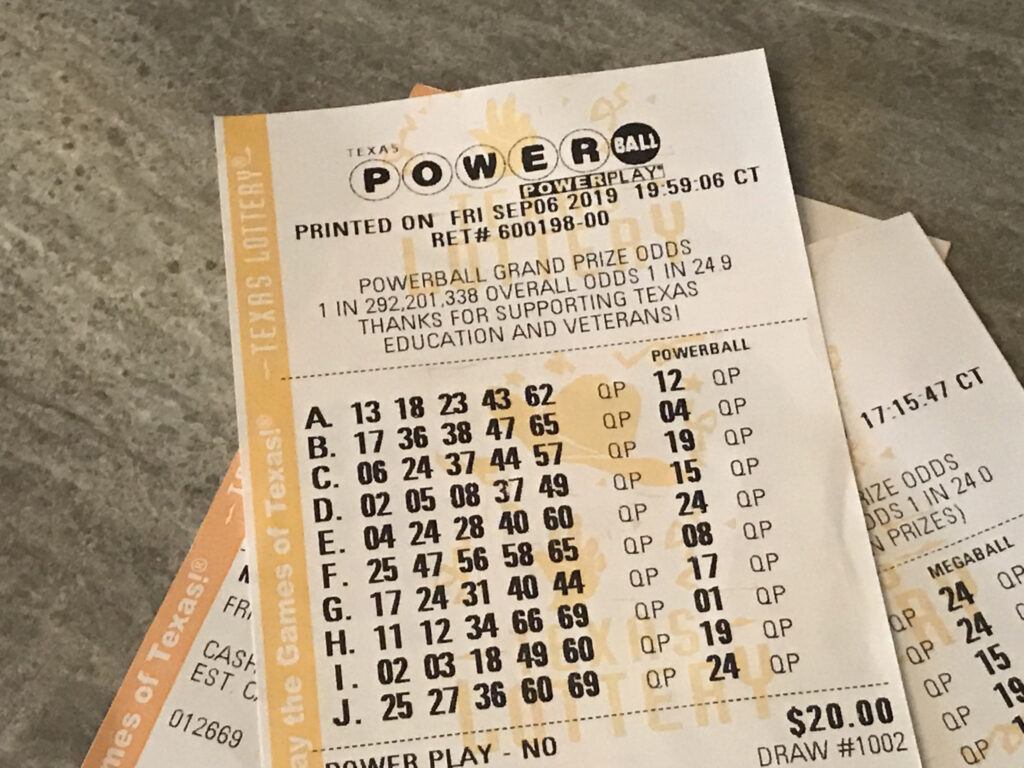
A standard Powerball ticket costs $2.00 per play.19 For an additional $1.00, players can add the Power Play option, which multiplies non-jackpot winnings.20 In some jurisdictions, a second add-on called Double Play is available for another $1.00, allowing the same numbers to be played in a separate drawing with a top prize of $10 million.21+2
Number Selection Process
To play, you must select a total of six numbers:
- Five Main Numbers (White Balls): Chosen from a pool of 1 to 69.22
- One Powerball Number (Red Ball): Chosen from a pool of 1 to 26.23
Players can choose their own numbers or opt for a “Quick Pick,” where the lottery terminal randomly generates the numbers for them.24 Statistics show that roughly 70% to 80% of winners use Quick Pick, simply because the majority of tickets sold are generated this way.
White Balls and Powerball Explanation
The two-drum system is what defines Powerball’s mechanics.
- The white balls represent the primary field.25 You need to match all five of these (in any order) to be in contention for the jackpot or the $1 million second prize.
- The red Powerball is the “key.”26 Matching the red ball alone wins you a prize ($4), but its primary function is to complete the jackpot combination.27 Because it is drawn from a separate drum, the red ball number can be the same as one of the white ball numbers.+1
Drawing Schedule
Powerball drawings are held three times a week:28
- Monday
- Wednesday
- Saturday
Drawings take place at 10:59 p.m. Eastern Time at the Florida Lottery draw studio in Tallahassee.29 The results are broadcast live on various television stations and streamed on the official Powerball website.
How Winners Are Selected
The drawing process is a highly secured event. Two different machines (Halogen II models) are used. One machine contains the 69 white balls, and the other contains the 26 red balls. The balls are kept in a dual-locked vault and are weighed and tested regularly to ensure perfect randomness. Independent auditors from firms like Marcum LLP oversee every drawing to guarantee the integrity of the results.
H3: Powerball Number Format Explained
The format is often written as 5/69 + 1/26.30
- The first set of numbers (1-69) determines your ability to win the lower tiers and contributes to the jackpot.
- The second set (1-26) is a binary “yes/no” for the jackpot and specific prize boosts.If you match 5 white balls but miss the Powerball, you win $1 million.31 If you match 0 white balls but hit the Powerball, you win $4.
H3: Powerball Drawing Process
Before the balls are dropped, the machines undergo a “pre-test” to ensure mechanical consistency. Once the draw begins, the white balls are mixed by air jets, and five are selected one by one. Then, the process is repeated for the single red Powerball. The entire televised sequence lasts less than 90 seconds, but the security protocols surrounding it take hours to execute.
Powerball Jackpot System
How Jackpots Roll Over
The defining feature of Powerball is the “rollover.” If no ticket matches all six numbers in a drawing, the money in the jackpot pool “rolls over” to the next drawing.32 Because the jackpot is partially funded by a percentage of ticket sales, the more people play, the faster the jackpot grows.33 During a massive rollover streak, the jackpot can jump by $100 million or more between drawings.
Why Jackpots Grow So Large
Two factors contribute to the astronomical size of modern jackpots:
- Difficulty: The 1 in 292.2 million odds make it statistically likely that the jackpot will roll over many times before someone wins.34
- Interest Rates: The “advertised” jackpot is actually an estimate of what the prize pool would be worth if invested in U.S. Treasury bonds over 30 years.35 When interest rates are high, the advertised annuity jackpot looks significantly larger than the actual cash on hand.
Starting Jackpot Amount
The current “guaranteed” starting jackpot is $20 million.36 Previously, it was $40 million, but the MUSL reduced it in 2020 due to the economic impact of the pandemic on ticket sales. However, after the first few rollovers, the prize quickly scales back into the hundreds of millions.
H3: Cash Option vs. Annuity Option
When a player wins the jackpot, they face the most significant financial decision of their life: how to receive the money.
| Feature | Annuity Option | Cash Option (Lump Sum) |
| Payout Structure | 30 payments over 29 years | One-time, immediate payment |
| Total Amount | The full advertised jackpot | Approximately 50% – 62% of the jackpot |
| Tax Impact | Taxed annually on each payment | Taxed immediately on the full amount |
| Pros | Guaranteed income for life; higher total | Total control; investment potential |
| Cons | No immediate access to full wealth | Higher immediate tax bill; risk of misspending |
Detailed Comparison:
The Annuity Option provides one immediate payment followed by 29 annual payments that increase by 5% each year.37 This is designed to protect winners from inflation and ensure they don’t spend their entire fortune in a few years.
The Cash Option is the actual amount of liquid cash the lottery has in the prize pool at the time of the win.38 Most winners choose the cash option because it allows them to invest the money immediately, potentially yielding a higher return than the lottery’s conservative bond investments.+1
Powerball Odds Explained
To play Powerball is to engage with some of the most daunting probabilities in the world of gambling. However, the game is structured so that winning something is relatively common.
Odds of Winning the Jackpot
The odds of matching all five white balls and the red Powerball are 1 in 292,201,338.39
To put this in perspective:
- You are more likely to be struck by lightning (1 in 15,300).
- You are more likely to be bitten by a shark (1 in 11.5 million).
- You are more likely to have identical quadruplets (1 in 729,000).
Odds of Winning Other Prizes
While the jackpot odds are slim, the overall odds of winning any prize are much better: 1 in 24.87.40
- $1 Million (5+0): 1 in 11,688,05441
- $50,000 (4+1): 1 in 913,12942
- $4 (0+1): 1 in 38.3243
Comparison with Other Lotteries
Powerball’s jackpot odds are slightly better than its main rival, Mega Millions (1 in 302.6 million).44 However, they are significantly harder than international games like the EuroMillions (1 in 139.8 million) or the UK National Lottery (1 in 45 million). Powerball trades “winnability” for “jackpot size.”
H3: Is Powerball Worth Playing?
From a strictly mathematical standpoint, the “expected value” (EV) of a $2 ticket is usually less than $2.45 However, when the jackpot exceeds $750 million, the EV can technically turn positive. However, this doesn’t account for “split-jackpot risk,” where multiple winners share the prize, or the heavy tax burden that eats into the winnings. Most analysts suggest playing for entertainment, not as a financial strategy.46+1
H3: Probability Breakdown
The calculation for Powerball odds uses the formula for combinations:
$$\frac{69!}{5!(69-5)!} \times 26 = 11,238,513 \times 26 = 292,201,338$$
This formula shows how the two separate pools (69 and 26) multiply the difficulty of the game.
Powerball Prize Tiers
There are nine ways to win in Powerball.47 Every prize except for the jackpot is a fixed cash amount, though these can be multiplied if you purchase the Power Play option.48+1
| Match | Prize | With 2x Power Play | With 10x Power Play* |
| 5 White + Powerball | Jackpot | Jackpot | Jackpot |
| 5 White | $1,000,000 | $2,000,000 | $2,000,000** |
| 4 White + Powerball | $50,000 | $100,000 | $500,000 |
| 4 White | $100 | $200 | $1,000 |
| 3 White + Powerball | $100 | $200 | $1,000 |
| 3 White | $7 | $14 | $70 |
| 2 White + Powerball | $7 | $14 | $70 |
| 1 White + Powerball | $4 | $8 | $40 |
| Powerball Only | $4 | $8 | $40 |
*The 10x multiplier is only available when the advertised jackpot is $150 million or less.49
**The Match 5 prize is capped at $2 million with Power Play, regardless of the multiplier drawn.50+1
Matching Combinations Explained
Unlike some lotteries where the order matters, Powerball white balls can be matched in any order.51 However, the red Powerball must match the specific red ball drawn.52 You cannot use the Powerball number to “fill in” for a missing white ball.+1
Tax Implications Overview
In the United States, lottery winnings are considered taxable income.53
- Federal Tax: The IRS automatically withholds 24% for U.S. citizens and 30% for non-residents. However, the top federal tax bracket is 37%, so winners almost always owe more at the end of the year.54
- State Tax: This varies wildly. States like Florida, Texas, and Washington have 0% state tax on winnings.55 New York, however, can take up to 10.9%.56+1
Biggest Powerball Jackpots in History
The last decade has seen a dramatic increase in record-breaking prizes. Here are the top 10 largest Powerball jackpots as of late 2025:
- $2.04 Billion (2022): Won by Edwin Castro in California.57 This is the world record.
- $1.8 Billion (2025): Shared by winners in Missouri and Texas.58
- $1.765 Billion (2023): Won by a group in California.
- $1.586 Billion (2016): The first “billion-dollar draw,” shared by three winners in California, Florida, and Tennessee.59
- $1.326 Billion (2024):60 Won by a single ticket in Oregon.61+1
- $1.08 Billion (2023):62 Won by a single ticket in California.
- $842.4 Million (2024):63 Won in Michigan on New Year’s Day.
- $768.4 Million (2019):64 Won by a single winner in Wisconsin.65+1
- $758.7 Million (2017):66 Won by Mavis Wanczyk in Massachusetts.
- $731.1 Million (2021): Won in Maryland.
Interesting Facts About Winners
- The “Curse” of the Lottery: While many winners live happily, others like Jack Whittaker (who won $315 million in 2002) faced tragedy, legal battles, and personal loss, highlighting the need for financial counseling.
- California Dominance: California has produced a disproportionate number of billion-dollar winners lately, largely due to its massive population and high ticket sales volume.
- The Power of Groups: Many large wins come from “Lottery Syndicates”—groups of co-workers or family members who pool their money to buy hundreds of tickets.
Powerball Winning Strategies (Myths vs. Reality)
Common Myths
- “Hot and Cold Numbers”: Some believe that numbers drawn recently are “hot” and more likely to appear again. In reality, the balls have no memory. Each drawing is an independent event with the exact same 1 in 292.2 million odds.
- “Buying from a Lucky Store”: While some stores have sold multiple winning tickets, it is simply because those stores sell a higher volume of tickets. The location has no impact on the physics of the draw.
Random Number Truth
The most statistically sound advice is to use random numbers. Why? Because humans tend to pick numbers based on dates (1-31). If you use birthdays and win, you are much more likely to share the jackpot with dozens of other people who also used those common numbers. Random numbers (Quick Picks) spread your selection across the entire 1-69 field, reducing split-jackpot risk.67
Pool Play Strategy
The only real way to increase your odds is to buy more tickets.68 Since buying 100 tickets alone is expensive, syndicates (pool play) are the most effective strategy. By pooling $10 with 20 colleagues, you have 100 chances to win instead of five. Just ensure you have a written contract to avoid legal disputes.
Quick Pick vs. Manual Selection
There is no mathematical advantage to either. However, manual selection allows you to avoid “unlucky” patterns (like 1, 2, 3, 4, 5) that thousands of other people play for fun.
H3: Can You Increase Your Chances?
Technically, no—you cannot change the probability of the numbers being drawn. You can only increase your expected return by playing when the jackpot is high and choosing unique numbers to avoid sharing the prize.
H3: Smart Tips for Playing Powerball
- Sign Your Ticket: A lottery ticket is a “bearer instrument.” Whoever holds it, owns it. Sign the back immediately.
- Budget Strictly: Never play with money you need for rent or groceries.
- Check Lower Tiers: Millions of dollars in $4 and $7 prizes go unclaimed every year because people only check the jackpot numbers.
Powerball Tickets – How & Where to Buy
U.S. States Where Powerball is Available
Powerball is available in 45 states.69 The states that do not participate are:
- Alabama70
- Alaska71
- Hawaii72
- Nevada (due to the casino lobby)
- Utah73
Online Ticket Options
Several states now offer official online ticket sales through their state lottery websites or apps (e.g., Georgia, Michigan, Pennsylvania). Residents can purchase tickets from their phones as long as they are physically located within the state borders.
International Participation Rules
If you are outside the U.S., you can use services like TheLotter or Jackpocket (within specific U.S. states). These services charge a convenience fee to buy the physical ticket for you. If you win a major prize, you will generally be required to travel to the U.S. to claim it in person.
Powerball Taxes & Legal Rules
Federal Tax Rules
The IRS treats lottery winnings as ordinary income.74
- Withholding: 24% for U.S. residents, 30% for non-residents.
- Total Liability: You will likely owe the difference between 24% and 37% (the top tax bracket) when you file your taxes the following year.
State Tax Variations
State taxes are a critical factor in where you buy your ticket:
- Highest Tax: New York (10.9%), Maryland (8.95%), New Jersey (8%).
- No Tax: California, Florida, New Hampshire, South Dakota, Tennessee, Texas, Washington, Wyoming.75
Claiming Prizes Anonymously
This is a major concern for winners. Only a few states (like Delaware, Kansas, Maryland, North Dakota, Ohio, and South Carolina) allow you to remain completely anonymous. In other states, you may be able to claim the prize via a Blind Trust or LLC to keep your name out of the headlines.
Legal Age Requirements
In most states, the minimum age to play is 18. However, in Nebraska, it is 19, and in Arizona, Iowa, and Louisiana, it is 21.
Powerball Around the World
Powerball is an American export that has inspired global versions. Australia has its own “Powerball,” which uses a 7/35 + 1/20 format. South Africa also has a Powerball game. However, the U.S. version remains the “Gold Standard” because of the sheer volume of the prize pool.
The fascination with U.S. Powerball abroad is so high that during $1 billion draws, search traffic for “Powerball results” often spikes more in Canada and the UK than in some U.S. states.
Powerball vs. Mega Millions
The two giants of the lottery world are often confused, but they have distinct differences.
| Feature | Powerball | Mega Millions |
| Ticket Cost | $2.00 | $5.00 (as of April 2025) |
| Number Format | 5/69 + 1/26 | 5/70 + 1/24 |
| Jackpot Odds | 1 in 292.2 Million | 1 in 290.5 Million |
| Draw Days | Mon, Wed, Sat | Tue, Fri |
| Starting Jackpot | $20 Million | $50 Million (New 2025 Rule) |
Which is better? Until recently, they were nearly identical. However, with the 2025 Mega Millions price hike to $5, Powerball has become the “value” play. While Mega Millions promises faster-growing jackpots, Powerball allows for more “shots on goal” for the same budget.
Responsible Gambling & Risks
Financial Risks
The biggest risk of Powerball isn’t losing $2; it’s the “sunk cost fallacy”—the feeling that because you’ve lost $100 over a month, you are “due” for a win. This can lead to reckless spending.
Responsible Play Tips
- Set a Limit: Decide monthly how much you will spend and stick to it.
- Play for Fun: View the $2 as the price of a 48-hour “dream,” not as an investment.
- Avoid Chasing: If you miss a big draw, don’t double down on the next one.
Lottery Addiction Awareness
Lottery play is a form of gambling.76 If you find yourself lying about your spending or feeling anxious when you can’t play, call the National Problem Gambling Helpline (1-800-522-4700).
Future of Powerball
Expected Rule Changes
To compete with the new $5 Mega Millions, the MUSL is expected to introduce a “National Millionaire Raffle” or perhaps a premium $5 or $10 ticket tier that offers better secondary odds. There is also talk of adding a Sunday drawing to make the game a daily evening staple.
Technology Impact
The shift to digital is the biggest trend. We are moving toward a future where “paper tickets” are obsolete. Blockchain technology is also being explored by some international lotteries to provide “provably fair” drawings that are even more transparent than the current mechanical systems.
Conclusion
Powerball remains the king of lotteries because it sells the ultimate product: Hope. For the price of a cup of coffee, it allows us to imagine a life free of financial constraint. While the odds are astronomically stacked against any individual, the fact remains that people do win.
By understanding the rules, the odds, and the tax realities, you can play the game smarter. Whether you’re part of a neighborhood syndicate or a solo dreamer, remember that the best way to win at Powerball is to play responsibly and enjoy the thrill of the draw.
FAQs About Powerball
What is the minimum Powerball jackpot?
The current starting jackpot is $20 million, though it can grow by tens of millions with each rollover.77
Can foreigners win Powerball?
Yes. You do not need to be a U.S. citizen. If you purchase a ticket legally within a participating jurisdiction, you can claim the prize.
How long do winners have to claim prizes?
This varies by state, typically ranging from 90 days to one year from the drawing date.
Can Powerball winnings be paid anonymously?
Only in certain states (e.g., DE, KS, MD, OH). In others, you may need to form a legal entity like a trust to maintain privacy.
How often does the Powerball draw happen?
Three times a week: every Monday, Wednesday, and Saturday at 10:59 p.m. ET.78
What happens if I lose my ticket?
A lottery ticket is a bearer instrument. Unless you signed the back, anyone who finds the ticket can claim the prize. Lost unsigned tickets are almost impossible to recover.
Does the Power Play apply to the jackpot?
No. The Power Play only multiplies non-jackpot prizes.79 The $1 million second prize is doubled to $2 million, regardless of the multiplier.
What are the odds of winning any prize?
The overall odds of winning any prize (starting at $4) are 1 in 24.87.80
Can I buy Powerball tickets with a credit card?
This depends on the state. Some states allow it, while others require cash or debit to prevent players from gambling on credit.
Is it better to take the cash or the annuity?
Mathematically, the cash option is often better if you have a sound investment plan. However, the annuity is safer for those who worry about managing a massive lump sum.

