
Table of Contents
The Australian retail landscape has undergone a seismic shift over the last decade, but few changes have resonated as deeply with the public as the ongoing saga of EB Games closures in Australia. For a generation of gamers, the bright red signage and the “Sale” posters of EB Games were more than just a storefront; they were a cultural hub—a place for midnight launches, heated debates over console wars, and the unique thrill of trading in a stack of old games for a new release.
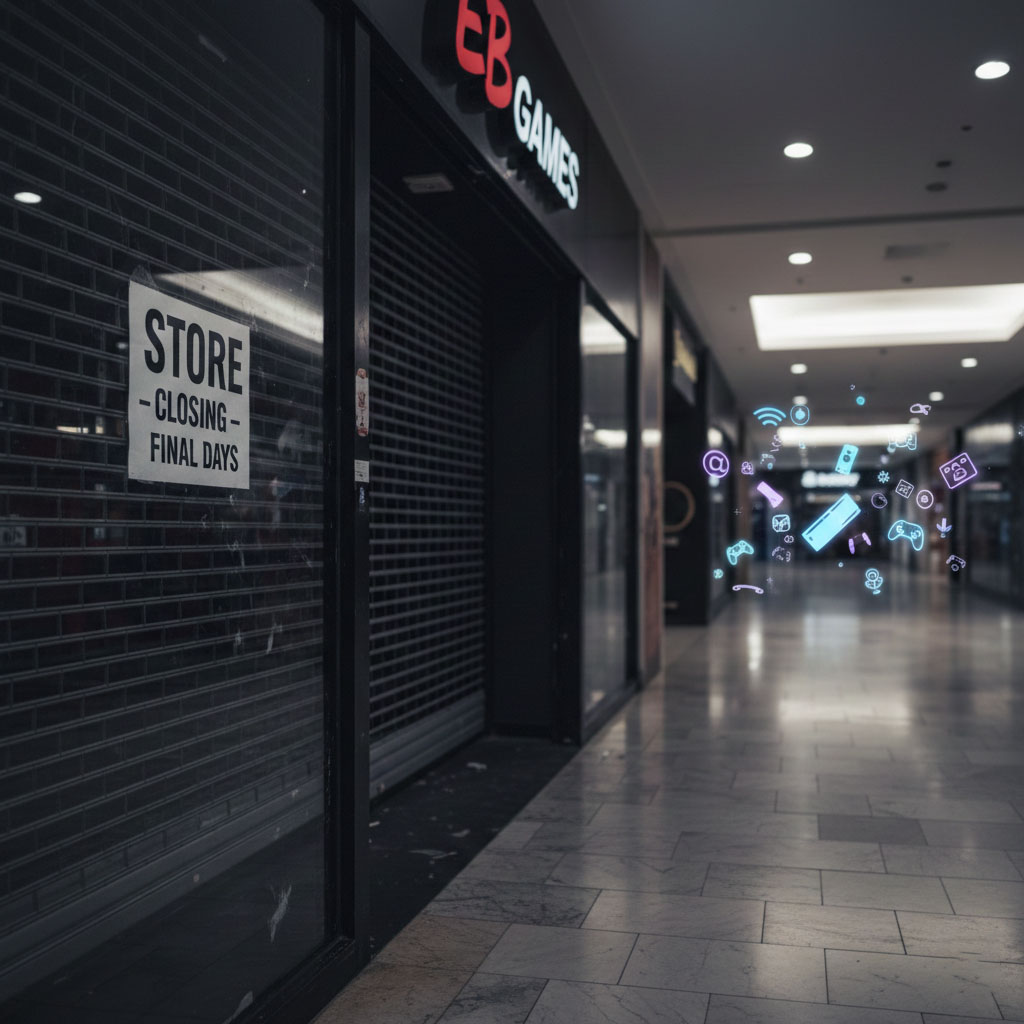
However, as we move through 2026, the reality of physical gaming retail has become increasingly stark. With the recent confirmation that EB Games is completely exiting the New Zealand market by the end of January 2026, many Australian consumers and industry analysts are asking the same question: Is the “Zingification” of EB Games enough to save it, or are we witnessing the slow-motion sunset of a retail giant?
Introduction
EB Games has been a cornerstone of the Australian shopping center experience for nearly three decades. At its peak, the retailer operated over 450 stores across the continent, from bustling metropolitan flagship locations to small regional outposts. To the uninitiated, the store might look like a cluttered den of plastic cases and plush toys, but to the gaming industry, it represents the primary physical touchpoint between publishers and consumers.
The news of store closures—which began as a trickle in the mid-2010s and accelerated into a strategic retreat by 2020—sent shockwaves through the community. These closures aren’t just about a business losing money; they signal a fundamental change in how Australians consume media, spend their leisure time, and interact with technology.
For employees, these shutdowns mean the loss of specialized retail roles. For gamers, they mean the end of a “third place” where they could belong. For the retail market, they serve as a cautionary tale of what happens when a digital revolution meets a brick-and-mortar business model.
History of EB Games in Australia
To understand where EB Games is going, we must look at where it began. The brand’s journey is a classic tale of corporate expansion and market dominance.
Origins of EB Games Globally
EB Games began as Electronics Boutique, founded by James Kim in the United States in 1977. Originally operating out of a mall in King of Prussia, Pennsylvania, the company focused on calculators and digital watches before pivoting to the burgeoning home computer and video game market in the early 1980s. By the 1990s, Electronics Boutique had become a global powerhouse, rapidly expanding into Europe, Canada, and eventually, the South Pacific.
Entry into the Australian Market
In 1997, Electronics Boutique officially entered Australia.1 The timing was perfect. The original PlayStation was at the height of its powers, the Nintendo 64 was bringing 3D gaming to the masses, and the concept of a “specialty” game store was fresh. Prior to this, Australians mostly bought games at department stores like Myer or David Jones, or toy stores like Toys “R” Us. Electronics Boutique offered something different: a staff that actually knew what they were talking about.
Growth Phase and Peak Years (2000–2012)
The 2000s were the “Golden Age” for EB Games Australia. In 2005, the company was acquired by its rival, GameStop, in a multi-billion dollar merger.2 This provided the Australian arm with even more capital to expand.
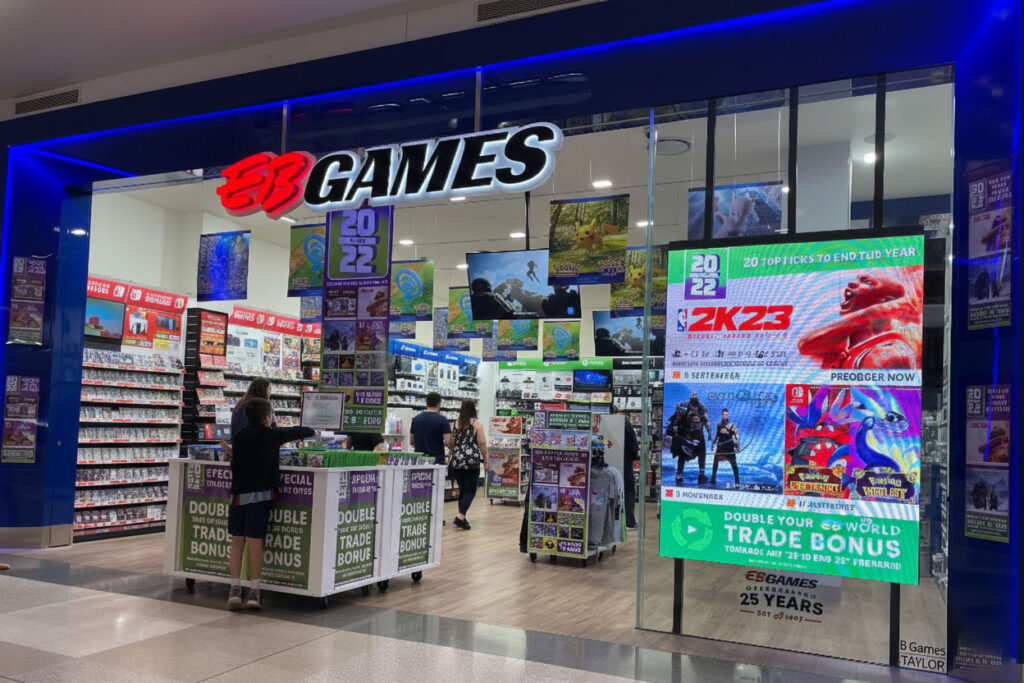
During this era, EB Games was untouchable. They aggressively acquired smaller competitors (like the Games Wizard chain) and secured prime real estate in almost every Westfield and Stockland mall in the country. This was the era of the Midnight Launch. For the release of titles like Halo 3, Grand Theft Auto IV, or Call of Duty: Modern Warfare 2, thousands of Australians would line up outside shopping centers at 11:59 PM. These events weren’t just sales opportunities; they were community festivals.
Role of EB Games in Australian Gaming Culture
EB Games Australia managed to cultivate a unique culture that differed from its US parent. The introduction of the EB World loyalty program was a masterstroke. By gamifying the shopping experience—offering “levels” to customers based on their spending—the retailer built a fiercely loyal base. At its peak, being a “Level 4” or “Level 5” member was a point of pride among hardcore Australian gamers.
EB Games Business Model Explained
The longevity of EB Games, despite the rise of the internet, can be attributed to a very specific (and at times controversial) business model.
Physical Retail Strategy
EB Games followed a “saturation” strategy. In many large malls, you would often find two EB Games stores—one at each end of the center. This ensured that no matter where a customer entered, they would pass an EB storefront. The stores were designed to be “high-energy,” with floor-to-ceiling stock and bright lighting.
The Pre-Owned Games Model: The Profit Engine
The secret to EB’s financial success was never the sale of new consoles or AAA titles. The margins on a new $100 PlayStation 5 game are razor-thin. Instead, the “Trade-In” model was the real money-maker.
- A customer trades in a game for $20 in credit.
- EB Games puts that game back on the shelf for $54.
- The profit margin is massive, and since it’s a “pre-owned” product, the publisher (like Sony or Ubisoft) doesn’t see a cent of that second sale.
Console Launches & Midnight Releases
EB Games positioned itself as the “Home of the Launch.” By offering exclusive “EB Expo” events and “Collector’s Editions” that couldn’t be found elsewhere, they forced enthusiasts to walk through their doors.
Loyalty and Customer Engagement
The EB World program (now boasting millions of members) gave the company something digital stores lacked: data. They knew exactly when you bought a console, which genres you liked, and when you were likely to trade in your old hardware. This allowed for highly targeted marketing that kept people coming back to physical stores long after it became “easier” to shop online.
When Did EB Games Closures Begin in Australia?
The decline didn’t happen overnight. It was a gradual erosion that turned into a landslide.
Timeline of Store Closures
- 2015–2018: The first signs of trouble. Minor closures occurred in regional areas where foot traffic was declining. The company began merging smaller EB stores with their sister brand, Zing Pop Culture.
- January 2020: The First Major Purge.3 EB Games shocked the industry by announcing the immediate closure of 19 “unprofitable” stores across Australia. This was a strategic “trimming of the fat” ordered by the US parent company, GameStop, which was facing its own financial crisis.
- 2021–2023: During and after the pandemic, many leases were not renewed. Stores in high-rent CBD locations and secondary suburban malls began to vanish.
- 2024–2025: A “Review and Consolidate” phase. Significant regional closures were reported in towns like Maryborough (VIC), Mudgee (NSW), and Atherton (QLD).4
- 2026: The announcement of the total shutdown of EB Games New Zealand has raised fears that a similar “final phase” could be approaching for the remaining 300+ Australian stores.5
Main Reasons Behind EB Games Closures in Australia
The reasons for the closures are multifaceted, representing a “perfect storm” of technological, economic, and social factors.
1. Rise of Digital Game Downloads
The single biggest threat to EB Games is the invisible store on your console’s home screen.
- Convenience: Why drive to a mall when you can click “Buy” and have the game download while you sleep?
- Hardware Trends: The release of the PS5 Digital Edition and the Xbox Series S (which have no disc drives) was a death knell for a business built on physical media. By 2024, reports indicated that over 80% of total game sales globally were digital.
- Steam and eShop: For PC and Nintendo Switch players, the digital ecosystems are so robust that physical stores are often seen as an afterthought.
2. Competition from Online Retailers
EB Games no longer competes just with other game stores; they compete with the entire internet.
- Amazon Australia: Since its local launch, Amazon has consistently undercut EB Games on price, often offering new releases for $20 less than the RRP, delivered to the door.
- JB Hi-Fi: Within Australia, JB Hi-Fi remains the dominant predator.6 Because they sell whitegoods, computers, and TVs, they can afford to use video games as “loss leaders”—selling them at a loss just to get people into the store. EB Games, being a specialty retailer, does not have that luxury.
3. Changing Consumer Behavior
- Subscription Services: Services like Xbox Game Pass and PlayStation Plus Extra have changed the value proposition of gaming. For $15–$20 a month, gamers get access to hundreds of titles. This reduces the need to “buy and trade” individual games—the very core of the EB Games profit model.
- Cloud Gaming: As NBN speeds have improved (slowly but surely), cloud gaming is becoming a viable alternative, further distancing the player from the need for a physical disc.
4. High Rental & Operating Costs
Australia has some of the highest retail rents in the world, particularly in Westfield-managed shopping centers.
- The Rent Trap: EB Games stores require high-traffic locations to survive. As mall owners increased rents, the “cost per square meter” for a store filled with $20 Funko Pops and $80 games became unsustainable.
- Staffing: Maintaining a knowledgeable, passionate workforce is expensive. EB has often been criticized for high-pressure sales environments, which is a symptom of trying to squeeze every cent of value out of a declining foot-traffic base.
5. Impact of COVID-19
The pandemic acted as a “time machine,” pulling 2030’s digital trends into 2020.
- Forced Digitalization: When stores were locked down, even the most tech-averse gamers learned how to use the PlayStation Store. They never looked back.
- Supply Chain Shocks: The shortage of PS5 and Xbox Series X consoles during the pandemic meant EB Games had no “anchor” product to draw people into stores for nearly two years.
Parent Company Strategy & Global Decisions: The GameStop Factor
EB Games Australia does not operate in a vacuum; it is a subsidiary of GameStop Corp.7 To understand the Australian closures, one must look at the chaos in the US.
In the early 2020s, GameStop became the center of a “meme stock” frenzy.8 While this provided the company with a massive cash injection, the underlying business remained troubled. The global strategy under leadership like Ryan Cohen has been one of extreme cost-cutting.
Restructuring has involved:
- Exiting “non-core” markets (Ireland, parts of Europe, and now New Zealand).9
- Closing underperforming stores to improve the balance sheet for Wall Street.
- A pivot toward “Web3” and digital collectibles, which has seen mixed results.
Australia has traditionally been GameStop’s most profitable international division. However, as the global company seeks to streamline, even “profitable” Australian stores are being scrutinized if their margins aren’t high enough to justify the overhead.
How Many EB Games Stores Closed in Australia?
While the company is often tight-lipped about exact numbers, retail analysts estimate that EB Games has shuttered between 15% and 25% of its physical footprint since 2020.
- Regional Devastation: The biggest losers are regional towns. When an EB Games closes in a town like Maryborough, it often means there is no longer a dedicated gaming retailer within a 100km radius.
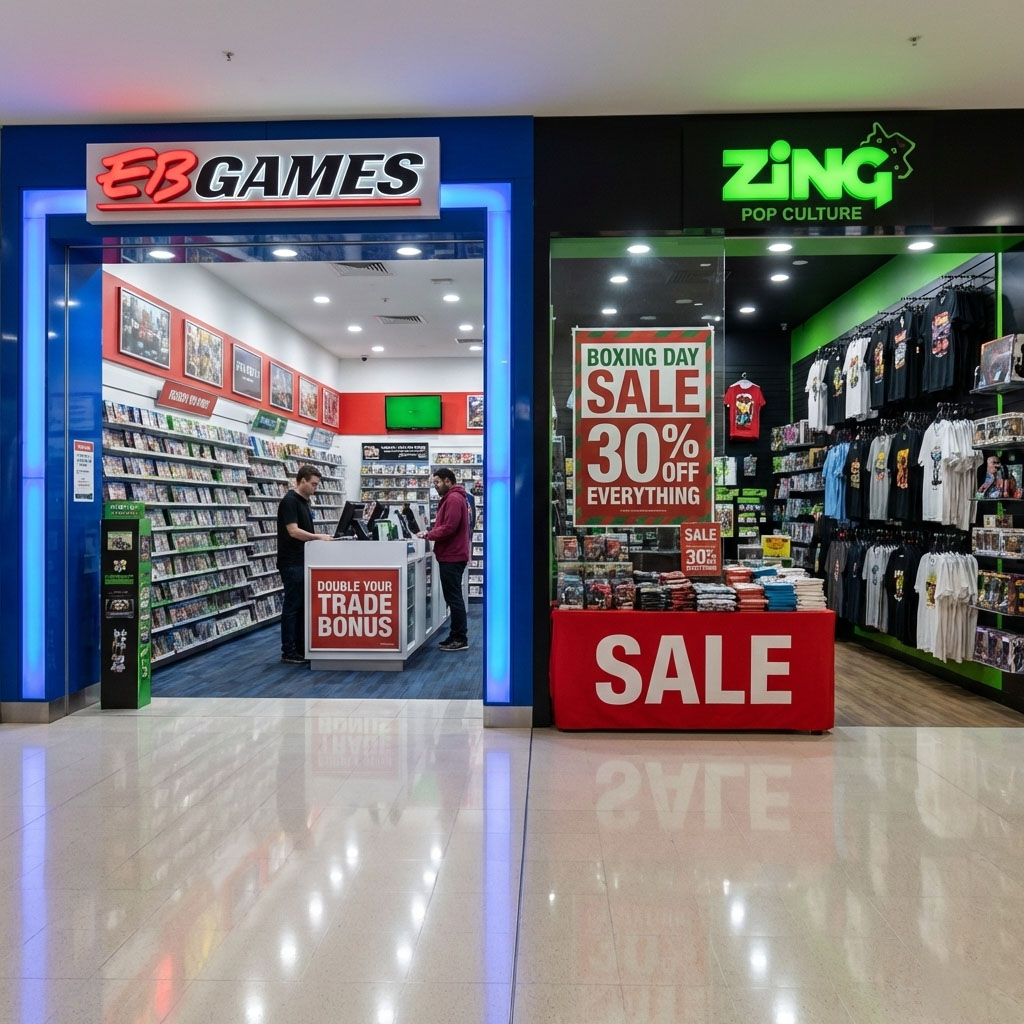
- The Flagship Strategy: Conversely, the company is doubling down on “Mega Stores.” These are often hybrid EB Games/Zing locations in major CBDs or high-traffic malls.10 They aren’t just selling games; they are selling an experience.
Impact of EB Games Closures
The ripples of a store closure extend far beyond the empty storefront.
1. Impact on Employees
Retail is one of Australia’s largest employers. EB Games was often a “first job” for thousands of young Australians. The closures have led to significant job losses, and while the company tries to relocate staff to nearby stores, the shrinking footprint makes this increasingly difficult. There is also a loss of “institutional knowledge”—passionate staff who know the difference between a JRPG and an ARPG are being replaced by algorithms and search bars.
2. Impact on Gamers
The closure of an EB Games is the end of a social ritual. For many, the “trade-in” was how they funded their hobby. Without a physical store, the cost of entry for gaming remains high. Additionally, the “Midnight Launch” is becoming a relic of the past. The sense of community that comes from standing in line with 200 other people who love the same thing is being lost to the sterile, silent experience of a digital download.
3. Impact on Shopping Centers
Shopping malls are struggling with the “Death of Retail.” A closed EB Games is another “dark” window in a mall, reducing the reason for people to visit. Since gamers are typically a high-spending demographic (who might buy a game and then stay for lunch), their absence is felt by surrounding businesses.
Is EB Games Completely Shutting Down in Australia?
The short answer: No. (At least, not yet).
It is important to distinguish between optimization and liquidation.
- Fact: EB Games Australia currently operates over 330 stores.
- Fact: The Australian arm remains one of the more stable parts of the GameStop empire.
- The Strategy: The company is moving toward a Hybrid Model. If you walk into a modern EB Games, you’ll notice that almost half the store is now “Zing Pop Culture”—dedicated to t-shirts, statues, board games, and home décor.
By diversifying into high-margin collectibles, EB Games is attempting to give people a reason to visit that a digital store cannot replicate. You can’t “download” a $600 Batman statue.
EB Games vs. JB Hi-Fi – Who Won the Retail War?
If you want to see why EB Games is closing stores, look at JB Hi-Fi.
| Feature | EB Games | JB Hi-Fi |
| Primary Focus | Niche Gaming & Pop Culture | Broad Electronics & Entertainment |
| Pricing | Often RRP ($100-$120) | Often Discounted ($79-$99) |
| Profit Driver | Pre-owned Games & Trade-ins | Hardware, Whitegoods, & Accessories |
| Footprint | High-rent mall kiosks/small stores | Large, high-volume warehouses |
| Digital Resilience | Struggling (dependent on discs) | Strong (diversified into other tech) |
JB Hi-Fi has effectively “won” the price war. By treating games as a way to get people into the store to buy a MacBook or a Fridge, they have made it impossible for EB Games to compete on cost alone. EB Games’ only defense is their loyalty program and their “exclusive” collector’s editions.
The Future of Gaming Retail in Australia
Can physical game stores survive the next decade? The answer lies in evolution.
1. The Merchandise Pivot
In 2024/2025, EB Games’ online sales data showed that 75% of revenue in the “Hobby & Leisure” category came from non-gaming items.11 This is the future. Expect EB Games stores to look more like “pop culture boutiques” where video games are just one part of the ecosystem.
2. The “Destination” Store
We will likely see fewer, but larger, stores. These “Destination EB” locations will feature gaming lounges, eSports tournament areas, and massive displays for collectibles. Small kiosks in suburban malls will continue to disappear.
3. Hardware as the Last Bastion
As long as people need to buy physical consoles, controllers, and VR headsets, there is a role for EB Games. Physical hardware is bulky and expensive to ship; many Australians still prefer to “Click and Collect” a $750 console rather than leave it on a doorstep.
What This Means for the Australian Gaming Industry
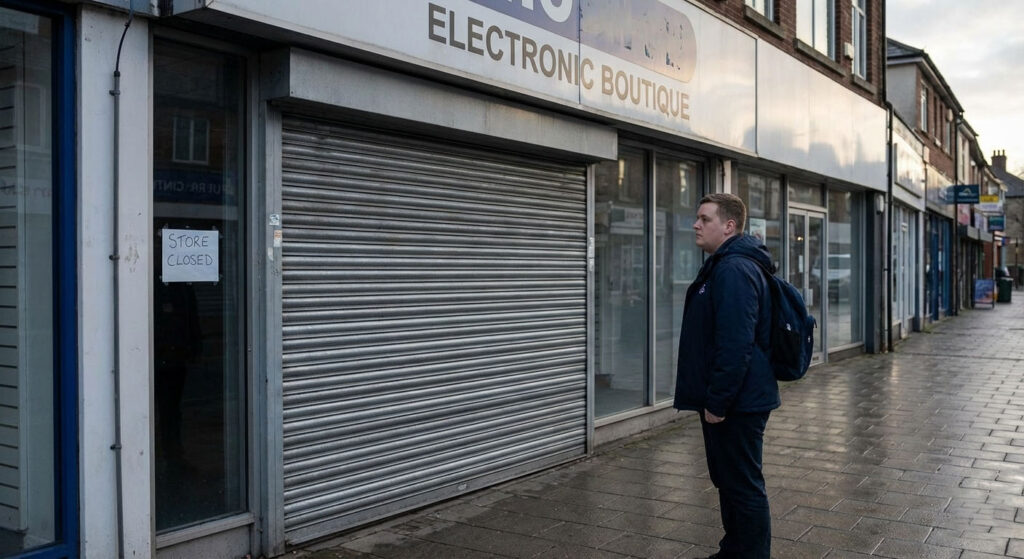
The decline of EB Games signals a shift toward a Digital Monopoly.
- Pricing Power: When physical stores disappear, the only place to buy a PlayStation game is the PlayStation Store. Without competition from EB or JB, Sony and Microsoft have more power to keep prices high.
- Game Preservation: The “pre-owned” market is essential for game preservation. As EB closes stores, the ability for people to find and play older, out-of-print titles diminishes.
- Developer Reach: For indie Australian developers, having their game on a shelf at EB Games was a massive marketing win. In a digital-only world, they must fight for visibility in a crowded online storefront.
Expert Opinions & Industry Analysis
Retail analysts suggest that we are entering the “Endgame” for specialized media retail.
“EB Games is essentially where Sanity Music was ten years ago,” says one Melbourne-based retail consultant. “They have a very loyal, aging fan base, but the younger generation—Gen Alpha—doesn’t even understand the concept of a ‘disc.’ To survive, EB must stop being a ‘game store’ and start being a ‘lifestyle store’.”
Predictions for the next 5 years:
- Consolidation: EB Games will likely shrink to roughly 150–200 high-performing stores in Australia.
- Total Zing Integration: The “EB Games” branding may eventually be secondary to “Zing.”
- Digital Partnership: We might see EB Games selling “Game Pass” subscription cards as their primary “software” product.
Conclusion: The End of an Era?
The EB Games closures in Australia represent a bittersweet transition. For many of us, the local EB was a place of excitement—a destination on a Saturday morning where $20 and a bit of luck could net you a hidden gem from the pre-owned bin.
The closures aren’t a sign that gaming is dying; quite the opposite. Gaming is bigger than it has ever been. But it has outgrown the plastic boxes and shopping mall corridors that birthed it. The “EB Games” of tomorrow will be a hybrid beast—part toy store, part clothing shop, and part digital service provider.
While the red-and-white “Sale” signs may be disappearing from your local mall, the impact EB Games had on Australian culture is permanent. They turned a niche hobby into a mainstream powerhouse. As we look toward a digital future, we should appreciate the remaining stores while they are still here—and maybe go in one last time to see if there’s anything worth trading in.
FAQs (Frequently Asked Questions)
Why are EB Games stores closing in Australia?
Stores are closing primarily due to the rise of digital downloads, high rental costs in shopping centers, and intense competition from online retailers like Amazon and “loss-leader” competitors like JB Hi-Fi. The parent company, GameStop, is also restructuring globally to focus on profitability over expansion.12
Is EB Games going bankrupt?
No. EB Games Australia remains a profitable entity within the GameStop group. However, they are “optimizing” their fleet, which involves closing underperforming stores to ensure the long-term survival of the brand.
Are any EB Games stores still open?
Yes, over 300 stores remain open across Australia.13 Many have been converted into “Hybrid” stores that combine EB Games with Zing Pop Culture.14+1
Will physical game stores disappear completely?
It is unlikely they will disappear entirely, but they will become “niche.” Physical stores will likely focus on high-end collectibles, hardware, and “special edition” physical releases for collectors, rather than the mass-market sale of standard game discs.
What are the best alternatives to EB Games in Australia?
For pricing, JB Hi-Fi, Big W, and Amazon Australia are the top choices. For a similar “enthusiast” experience, independent local game stores and online specialty retailers are growing in popularity.

