
Table of Contents
The Stranger Things 5 Aftermath: A Decade of Change and Nostalgia
Introduction: The Farewell to Hawkins
With the arrival of the highly anticipated Season 5 of Stranger Things—Netflix’s definitive series—the internet has been swept up in a powerful wave of emotion, deep nostalgia, and poignant self-reflection. The iconic series, which first graced screens in 2016 as a pitch-perfect love letter to 1980s cinema and culture, is now drawing to a close, with the final episode—a feature-length event—scheduled for New Year’s Eve, December 31, 2025. This conclusion marks the end of an era not just for the characters in Hawkins, Indiana, but for the millions of fans who have grown up, evolved, and navigated a transformative decade alongside them.
The show’s final chapter is more than just a piece of television; it is a shared cultural time capsule. This article explores the immediate cultural impact of the finale’s rollout, the emotional significance of saying goodbye to the Party, and how the internet is processing this ten-year journey through ubiquitous viral trends, most notably the reflective and deeply personal “Then vs. Now” challenge that has taken over platforms like TikTok.
Stranger Things 5 Finale: A Look Back Without Spoilers
The structure of the final season—split into three volumes, with the series finale being a two-hour, five-minute cinematic event screened simultaneously in theaters—underscores the immense significance Netflix has placed on this conclusion. The final episodes are designed not just to conclude a narrative, but to serve as a communal, global farewell.
The End of an Era: The Weight of Conclusion
Stranger Things Season 5 marks the inevitable conclusion of an extraordinary, seven-year real-world journey for the devoted fandom. Fans have followed the core crew—Eleven, Mike, Dustin, Lucas, Will, and Max—through a series of mysteries, supernatural threats, and deeply human trials, from childhood innocence to the brink of young adulthood.
Even without spoiling the content of the final chapters, the emotional weight is palpable. Volume 1, which premiered on November 26, 2025, has already introduced seismic shifts, notably the major reveal that Will Byers now possesses powers—a twist that changes the dynamics of the final confrontation with Vecna. The Duffer Brothers have faced the monumental task of concluding a complex narrative that ties together the Upside Down, Henry Creel, the Mind Flayer, and the core emotional relationships of the Party.
The finale’s emotional gravity is magnified by the show’s deliberate blending of epic spectacle and intimate character drama, a quality that director and executive producer Shawn Levy credits as the show’s “special sauce.” The conclusion requires the delivery of an action-packed, definitive victory against the forces of darkness while simultaneously providing satisfying emotional closure for characters whose personal arcs have mirrored the real-life coming-of-age of its audience. The feeling of closure is less about the plot, and more about shutting the door on a decade-long connection with these fictional friends.
What Fans Expected vs. What They Got
When the final season was announced, fan expectations soared to impossible heights, a phenomenon amplified by the three-year hiatus between Season 4 and the Season 5 debut. As cultural commentators have noted, long gaps allow fans to “mythologize” a show, creating an “idealized version” in their heads that no real production can ever truly match.
- Anticipation for the Ultimate Confrontation: Fans largely expected a massive, spectacular final battle, a sentiment seemingly confirmed by the two-hour-plus runtime of the final episode, “The Rightside Up.” Theories running wild include everything from Eleven making the ultimate sacrifice to a desperate, last-minute time manipulation tactic, possibly involving the sci-fi classic A Wrinkle in Time, which is prominently featured in Volume 1.
- Theories Confirmed and Subverted: Volume 1 already fulfilled a major fan theory by granting Will Byers powers, but subverted expectations by clarifying his abilities are channeled through the hive mind rather than being intrinsic like Eleven’s. This has spurred new, high-stakes theories, such as the idea of the Party rolling a “Critical Roll” by combining Eleven, Eight, and Will (as the new “One”) to defeat Vecna.
- The Demand for Emotional Closure: Beyond the supernatural plot, fans craved a resolution for the foundational relationships: Mike and Eleven, Joyce and Hopper, and the enduring, profound bond between Will and the rest of the Party. The true test of the finale will be its ability to balance the genre requirements of a horror-sci-fi epic with the tender, heartfelt demands of a decade-long friendship story.
The record-breaking viewership for the initial Volume 1 (59.6 million views in five days) demonstrates that, despite the impossible expectations, the global audience remains unified and fully invested in seeing the Duffer Brothers stick the landing.
The “Then vs. Now” Phenomenon: How TikTok Is Celebrating the Journey
In the wake of the highly-charged Volume 1 debut, the emotional energy of the fandom has found its perfect creative outlet on TikTok, birthing a massive viral trend that beautifully encapsulates the show’s impact.
The Trend Explained: The Carousel of Time
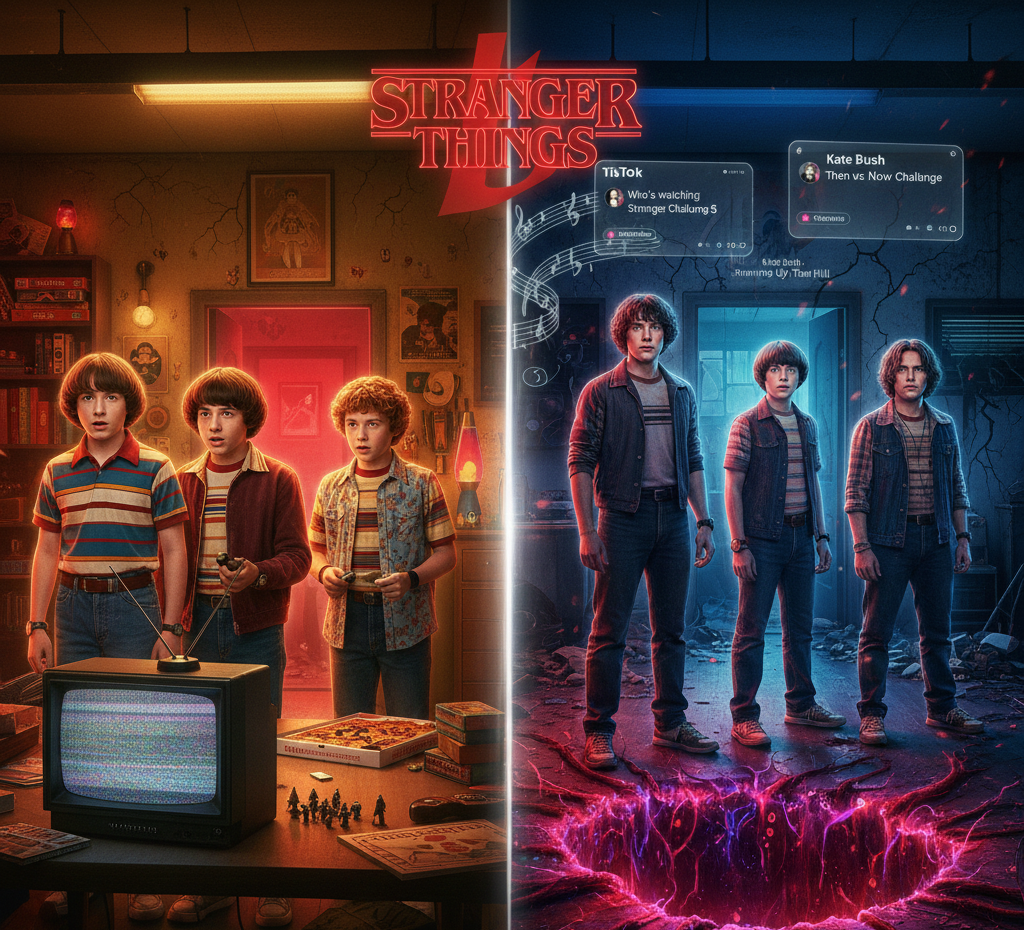
The “Then vs. Now” Stranger Things trend is brutally simple yet emotionally potent. Leveraging TikTok’s popular carousel format, creators juxtapose two photos to show the physical passage of time:
- Slide 1 (“Now”): A current photo of the creator, often looking more mature, reflective, or even slightly exhausted from the decade of growth. The on-screen text reads: “Who’s watching Stranger Things Season 5?“
- Slide 2 (“Then”): A throwback photo of the creator from 2016, or the year they first watched Season 1, typically showing a younger, wide-eyed, or distinctly adolescent version of themselves. The caption reads: “Who actually watched it… who started watching in 2016.”
The contrast between the two images provides a vivid, visual time capsule, allowing viewers to see not just the characters aging on screen, but also the physical and stylistic transformation of the global audience. It’s a shared acknowledgment of personal history intertwined with the show’s timeline.
Why Kate Bush’s Song Became the Soundtrack of the Journey
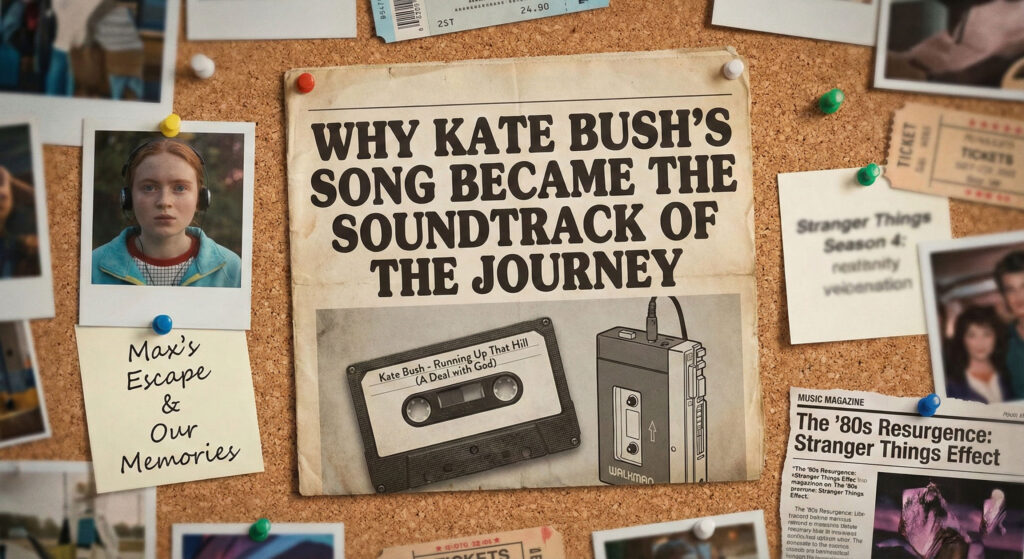
The undeniable sonic anchor of the “Then vs. Now” trend is Kate Bush’s “Running Up That Hill (A Deal with God).” The song’s use is far from coincidental; it’s a brilliant piece of collective pop culture memory.
- A Symbol of the Show’s Resilience: The song saw a monumental global resurgence after its critical feature in Season 4, becoming an instant symbol of the show’s ability to pull from the 80s and recontextualize old art for a new generation. Its use now ties the beginning of the final chapter directly back to one of the most beloved moments of the previous season.
- Emotional Resonance: Lyrically, the song speaks of making a “deal with God” to swap places, a theme of sacrifice, desperate connection, and overcoming seemingly insurmountable odds—the very heart of the Stranger Things narrative. For fans, this translates into their personal journey: the person they were in 2016 might feel like a different person entirely, and “Running Up That Hill” provides a powerful, melancholy energy to bridge that emotional distance.
- Amplifying Sentimentality: The song’s driving rhythm and high emotional pitch amplify the sentimentality of the visual contrast. The juxtaposition of a slightly grainy 2016 photo with the dramatic, synth-heavy track creates a feeling of wistful, epic reflection, perfectly suited for the bittersweet feeling of a beloved series ending.
Emotions Unleashed: Fans’ Reflections Through the Trend
The “Then vs. Now” trend is more than simple content creation; it’s a form of collective digital therapy. It serves as a space for fans to visually and verbally process their shared journey, culminating in a powerful, unified emotional response:
- Mourning and Acceptance: Fans are mourning the end of the show, but the trend offers a healthy form of acceptance by framing the conclusion as a graduation of sorts. The 2016 self represents the beginning, and the 2025 self represents the person capable of handling the end.
- The Relatability of Aging: The young cast of Stranger Things grew up on camera, forcing viewers to confront their own aging. For fans who were teenagers in 2016, the trend highlights major life milestones—graduating from school, starting careers, moving out—that occurred during the show’s run. For older fans, it highlights the cultural changes of the last decade, from the shift in fashion trends to the change in media consumption habits.
- A Shared Experience: In a fragmented media landscape defined by niche interests, Stranger Things is a rare example of a genuine monoculture. The “Then vs. Now” trend creates a powerful, instantaneous feeling of belonging: everyone who participates knows exactly what the other person experienced during that time, making the individual reflection a shared, collective moment. This sense of global community is what transforms a show finale into a lasting cultural event.
From 2016 to 2025: How Stranger Things Changed Us
The decade defined by Stranger Things saw immense technological, political, and cultural upheaval. The show did not just entertain; it actively shaped the cultural landscape.
The Influence of Stranger Things on Pop Culture
Since its July 2016 debut, Stranger Things has left an indelible mark on global pop culture:
- The 80s Revival Architect: While 80s nostalgia existed before, Stranger Things perfected and mainstreamed the aesthetic. It launched a wave of demand for retro-inspired products, fashion, and technology, making the chunky sweaters, high-waisted denim, and classic arcade games aspirational again. This influence can be seen in fashion runways, music videos, and the development of other period-piece shows.
- The Netflix Flagship: The show became the quintessential streaming phenomenon. It validated Netflix’s model of binge-watching and demonstrated the power of a globally synchronized release. It not only dominated the charts but, as the “de facto Netflix show,” it helped define how streaming services now approach blockbuster, water-cooler television.
- Musical Alchemy: The show proved its mastery of the ‘needle drop,’ capable of turning relatively obscure or forgotten tracks into global chart-toppers. From “Should I Stay or Should I Go” to the massive, career-reviving success of “Running Up That Hill,” Stranger Things became a cultural tastemaker, demonstrating the power of visual media to influence the music industry in unprecedented ways.
- Launching Stars: The show’s young cast—Millie Bobby Brown, Finn Wolfhard, Noah Schnapp, Gaten Matarazzo, and Caleb McLaughlin—became global superstars, navigating the often-complex transition from child actors to adult celebrities entirely in the public eye, often leading the cultural conversations around social media, mental health, and the pressures of modern fame.
A Decade of Personal Change: What Fans Are Saying
The longevity of Stranger Things means it served as a cultural backdrop for fans’ most formative years.
For the core Gen Z and younger millennial audience, the show tracked their journey from high school through university and into the professional world. Sharing personal anecdotes has become a critical part of the finale experience:
“I was in my first year of high school when Season 1 dropped. Now I’m a lawyer. I spent a decade of my life waiting for these kids to save the world, and in a way, they kept me company while I was trying to figure out mine.”
Many fans share stories of the show being a comfort during turbulent times: a consistent, nostalgic escape during the uncertainties of the late 2010s and early 2020s. The show’s themes of enduring friendship, found family, and overcoming seemingly impossible odds—all while wrapped in a blanket of 80s simplicity—provided a much-needed emotional ballast for a generation facing rapid change. The finale is therefore not just a narrative ending; it is a moment where fans close a deeply personal chapter of their lives.
The Lasting Legacy of Stranger Things: What Comes Next?
The conclusion of the main narrative is an ending, but the cultural impact of Stranger Things ensures its legacy will live on, both on and off-screen.
The End of a Chapter, But Not the End of the Story
The Duffer Brothers and Netflix have been clear that while the flagship series is concluding, the Stranger Things universe is not. The success of the franchise has spurred confirmed plans for expansion:
- Animated Spin-Offs: An animated series, Stranger Things: Tales From ’85, has already been announced, indicating an effort to keep the nostalgic world of Hawkins alive through new formats and perhaps new characters.
- Stage Productions: The London and Broadway stage production, Stranger Things: The First Shadow, serves as a crucial prequel, continuing the lore of the Upside Down and characters like Vecna/Henry Creel. This theatrical expansion keeps the IP generating content and driving fan engagement in non-traditional ways.
- Potential Live-Action Spinoffs: While the main story of Eleven and the Party is wrapping up, the door remains open for live-action spin-offs focusing on other characters or entirely new corners of the universe, leveraging the rich, established world-building.
The ultimate legacy of Stranger Things will be defined by its ability to transition from a single, globally dominant series into a perennial, multi-platform franchise that continues to redefine the boundaries of a streaming-era IP.
The Show That Defined a Generation
Beyond the metrics and the spin-offs, Stranger Things has secured its place as an iconic cultural touchstone—a show that defined a generation in the same way that Friends or The X-Files did for previous eras.
Its unique blend of cinematic influences—Stephen King, Steven Spielberg, and John Carpenter—fused with a core of deeply written, relatable characters will ensure its longevity. The show taught a generation the joy of genre blending, showing how sci-fi and horror could be used as a vehicle for telling stories about friendship, love, and acceptance.
The final image the show leaves behind, whether it is a triumphant victory or a heartbreaking sacrifice, will be forever linked to the personal memories of its audience. For millions, December 31, 2025, won’t just be New Year’s Eve; it will be the night they said goodbye to the friends who saw them through a decade of change, making Stranger Things not just television history, but a profound piece of personal history for an entire global generation.
Conclusion:
As Season 5 of Stranger Things concludes with its feature-length cinematic finale, the emotional power of the moment is undeniable. The decade-long journey, which saw the show grow from a sleeper hit to a global behemoth, has culminated in a massive, shared cultural moment. The combination of the final narrative’s emotional heft and the widespread viral trends like the reflective “Then vs. Now” challenge has transformed a television finale into a collective, bittersweet farewell.
Stranger Things has created more than memories; it has provided a framework for personal reflection, proving that the deepest connections are often formed between fiction and our own lives. Whether you were a fan binge-watching in 2016 or someone who joined the journey later, the end of this series closes a powerful chapter, leaving behind a legacy that will inspire future storytellers and forever mark the television landscape of the mid-2010s to the mid-2020s.
Call to Action (CTA):
What did you think of the Stranger Things finale? As the final episodes air, share your own “Then vs. Now” video with us on social media using the hashtag #MyStrangerThingsDecade and let us know how the show, the characters, and the journey have impacted your life over the years!

