
Table of Contents
The history of medicine has often been defined by a slow, grueling race between human ingenuity and biological evolution. For centuries, we have fought pathogens and chronic conditions using a process of trial and error—observing symptoms, testing compounds in Petri dishes, and hoping for a breakthrough. But today, we are witnessing a fundamental shift. The convergence of high-performance computing and biological data has birthed a new era: the age of AI vs. Viruses-driven medicine.
No longer are scientists limited by the speed of physical experiments alone. We are now entering a landscape where AI vs. Viruses in healthcare acts as a powerful lens, allowing us to see biological structures that were previously invisible and predict interactions that would take a human lifetime to calculate. From neutralizing deadly viruses before they even touch a human cell to mining the vast “dark matter” of our gut microbiome for the next generation of metabolic treatments, artificial intelligence is not just an assistant; it is the lead architect of a medical revolution.
Introduction – Why AI Is Becoming Critical in Modern Medicine
To understand why artificial intelligence has become the cornerstone of 21st-century medicine, one must first understand the staggering complexity of the human body. Biology is, at its core, an information science.1 A single human cell contains a vast network of proteins, enzymes, and genetic instructions, all interacting in a chaotic yet coordinated dance.
Limitations of Traditional Virus and Disease Research
Historically, the process of understanding a new virus or a metabolic disorder like Type 2 diabetes was a manual one. Researchers relied on X-ray crystallography and cryo-electron microscopy to visualize proteins—a process that can take months or even years for a single molecule. Once a structure was identified, finding a drug to interact with it involved screening tens of thousands of chemical compounds, most of which would fail. This is why the framework of AI vs. Viruses is so essential; it bypasses the physical bottleneck of manual labor.
This “traditional” pipeline is notoriously inefficient:
- Cost: It costs an average of $2.6 billion to bring a single drug to market.
- Time: The timeline from discovery to pharmacy shelves often exceeds a decade.2
- Failure Rate: Approximately 90% of drug candidates fail during clinical trials because humans are far more complex than the animal models or cell cultures used in early testing.
Rise of AI-Driven Biomedical Breakthroughs
The emergence of AI drug discovery has changed the math. Large Language Models (LLMs) and specialized neural networks are now being applied to “biological languages”—the sequences of DNA and the folding patterns of proteins.3 Instead of guessing which molecule might fit into a viral receptor, AI vs. Viruses models can simulate billions of possibilities in a virtual environment.4+1
This transition from “wet lab” (physical testing) to “in silico” (computer simulation) research allows scientists to fail fast and succeed faster.5 By leveraging machine learning, researchers can identify patterns in massive datasets that are impossible for the human eye to detect.6 This isn’t just about speed; it’s about a new level of precision that allows us to target diseases at the molecular level with surgical accuracy.+1
How AI Helped Scientists Stop a Virus Before Cell Entry
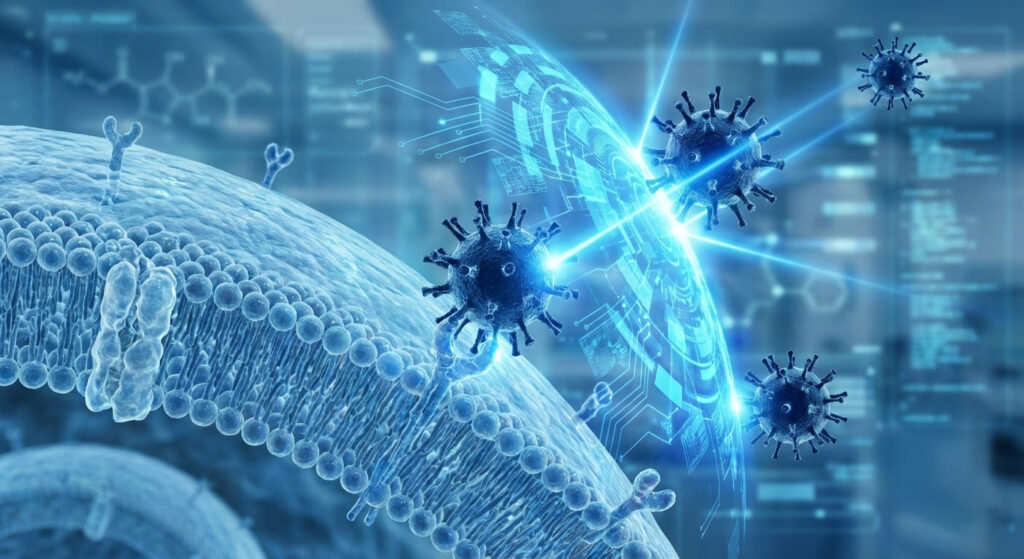
One of the most profound achievements in recent years is the use of AI vs. Viruses to prevent viral infection at the most fundamental level: the point of entry.7 To understand this breakthrough, we must look at how viruses operate.
Explanation of How Viruses Normally Enter Human Cells
A virus is essentially a genetic “payload” wrapped in a protein shell.8 To infect you, it must find a way inside your cells. It does this through a “lock and key” mechanism. On the surface of the virus are spike proteins (the “key”), which are designed to bind to specific receptors on the surface of human cells (the “lock”).9+1
For example, the SARS-CoV-2 virus uses its spike protein to bind to the ACE2 receptor on human lung cells.10 Once the key turns the lock, the cell membrane opens, and the virus injects its genetic material, hijacking the cell to create millions of copies of itself.11 In the context of AI vs. Viruses, the goal is to break this key before it ever reaches the lock.+1
Role of AI in Protein Structure Prediction and Simulation
The challenge for scientists has always been that these protein “keys” are constantly moving and changing shape.12 Understanding the exact 3D structure of these proteins is essential to designing a drug that can block them.13+1
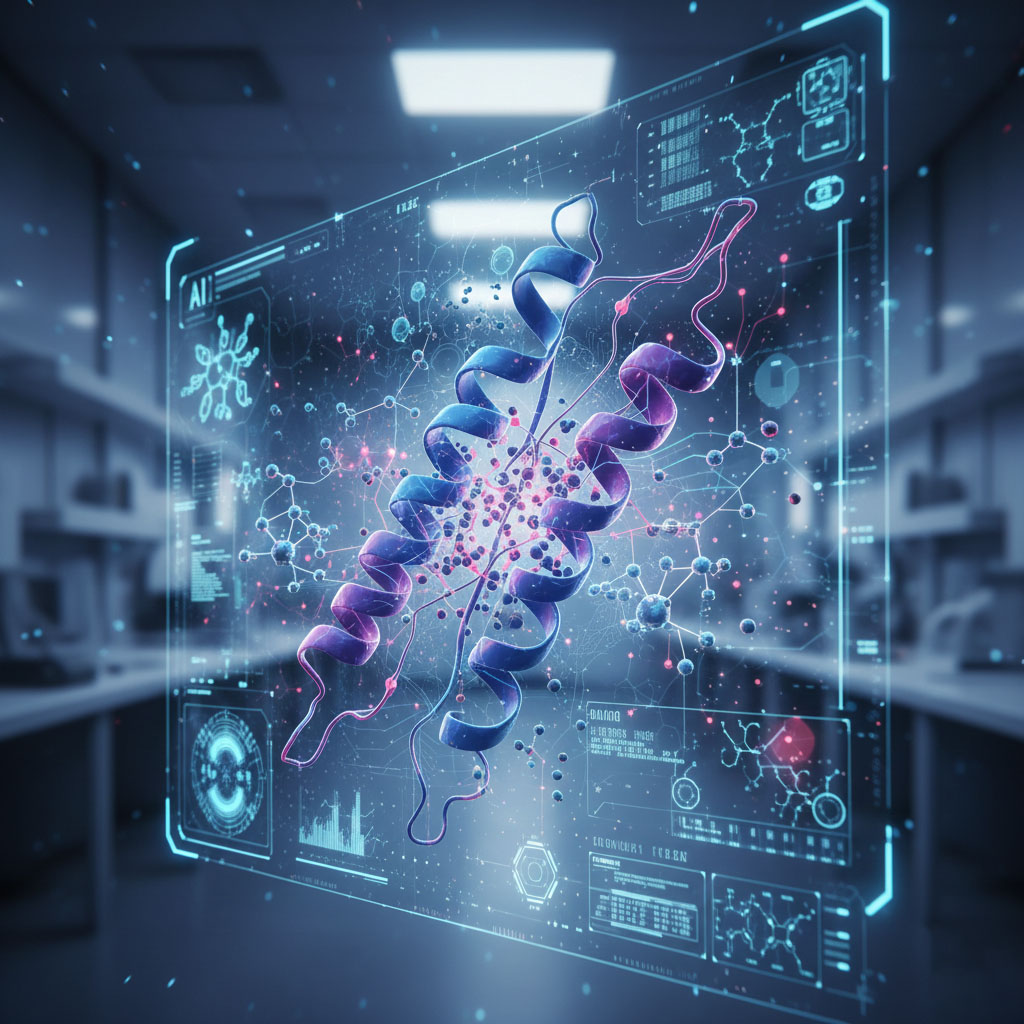
Enter AI models like DeepMind’s AlphaFold and RoseTTAFold. These systems have effectively solved the “protein folding problem,” predicting the 3D shape of a protein based solely on its amino acid sequence. By using AI vs. Viruses tools, scientists can now visualize the “pockets” and “grooves” on a viral spike protein with near-atomic precision.14
How AI Identified a Method to Block Viral Entry
Using generative AI vs. Viruses technology, researchers can now design entirely new proteins—de novo proteins—that do not exist in nature.15 These AI-designed proteins act as “decoy” receptors or “molecular glue.”
In a landmark study, AI vs. Viruses was used to design a protein that binds to a virus’s entry mechanism more tightly than the human cell does. When the virus encounters these AI-designed molecules, it binds to them instead of the human cell. The “key” is effectively jammed in a fake lock, leaving the virus unable to infect the host. This approach, often called AI virus prevention, represents a shift from treating an infection to preventing it from ever starting.
Why Stopping a Virus Before Cell Entry is a Breakthrough
Most current antivirals work by interfering with the virus after it has already entered the cell and started replicating. While effective, this often leads to significant side effects as the drug must interfere with the cell’s internal machinery. Within the strategy of AI vs. Viruses, stopping the entry is the “Holy Grail.”
By stopping the virus outside the cell:
- Lower Toxicity: The drug doesn’t need to enter human cells, reducing side effects.
- Broad Spectrum Potential: AI can identify “conserved” regions of viruses—parts that don’t change even when the virus mutates.16 This could lead to a single “universal” treatment for all variants of the flu or coronaviruses.
- Speed of Response: During the next pandemic, AI vs. Viruses could potentially design a neutralizing protein within days of the virus being sequenced.
Real-World Implications for Vaccine and Antiviral Development
The integration of AI vs. Viruses into virology is fundamentally shortening the distance between a viral outbreak and a clinical solution.
Faster Drug Discovery Timelines
In the past, designing a vaccine or antiviral required a “spray and pray” approach—testing thousands of candidates to see what stuck. With AI drug discovery, the computer does the heavy lifting. Researchers can now move from a viral sequence to a highly optimized drug candidate in a fraction of the time. During recent respiratory virus studies, AI vs. Viruses-led platforms reduced the “hit-to-lead” time (the time it takes to find a promising molecule) from years to just weeks.
Reduced Trial-and-Error in Labs
Physical lab experiments are expensive and resource-intensive.17 AI vs. Viruses research allows scientists to run “digital twins” of experiments.18 By simulating how a drug interacts with a protein in a virtual environment, they can eliminate 99% of the candidates that are likely to fail or be toxic. This means that when scientists finally move to animal or human trials, they are doing so with a much higher confidence level, saving billions of dollars and, more importantly, countless lives.+1
AI-Powered Discovery in Gut Bacteria and Human Metabolism
While the battle of AI vs. Viruses is making headlines in virology, its impact on chronic metabolic diseases—such as obesity and Type 2 diabetes—is equally transformative. The secret to this revolution lies within us: the gut microbiome.
What Gut Microbiome Is and Why It Matters
The gut microbiome is a complex ecosystem of trillions of bacteria, fungi, and viruses living in our digestive tract.19 Far from being “germs,” these microbes act as a massive chemical factory, producing molecules that communicate with our brain, our immune system, and our metabolism.20+1
Recent science has shown that an imbalance in these bacteria (dysbiosis) is a primary driver of metabolic syndrome.21 However, the microbiome is so vast and varied that mapping every interaction was previously impossible without the computational power of AI vs. Viruses analytics.
How AI Analyzed Gut Bacteria Molecules
There are millions of unique genes in the human microbiome—far more than in the human genome itself.22 AI is the only tool capable of mining this “dark matter.” By applying the principles learned in AI vs. Viruses studies to the microbiome, researchers have begun to categorize the “metabolites” (small molecules) produced by these bacteria.
By analyzing the blood and stool samples of thousands of individuals, AI vs. Viruses platforms identified specific molecules produced by “lean” individuals that were missing in those with obesity or diabetes.
Discovery of Molecules Influencing Obesity and Diabetes
One of the most exciting discoveries involves AI vs. Viruses models identifying bacterial proteins that mimic human hormones. For instance, some gut bacteria produce molecules that act on the same receptors as GLP-1 (glucagon-like peptide-1)—the hormone targeted by modern weight-loss drugs.
By using AI vs. Viruses methodologies to scan the microbiome, scientists have found natural, potent molecules that can regulate blood sugar and suppress appetite. This gut microbiome obesity treatment focuses on restoring the body’s natural metabolic signals rather than overriding them with synthetic chemicals.
Difference Between Microbiome-Based Treatments and Current Drugs
Current metabolic drugs are typically synthetic compounds injected into the body. Microbiome-based treatments, often called “Live Biotherapeutics” or “Postbiotics,” aim to either introduce beneficial bacteria or the specific molecules they produce. This approach, facilitated by AI vs. Viruses logic, is more “bio-identical,” working in harmony with the body’s existing pathways rather than forcing a physiological change.
Why This Research Could Replace or Improve Drugs Like Ozempic and Mounjaro
The rise of GLP-1 agonists like Ozempic (semaglutide) and Mounjaro (tirzepatide) has changed the landscape of obesity treatment.23 However, they are not without their flaws, and AI vs. Viruses research is helping us find Ozempic alternatives that may be safer and more sustainable.
Limitations and Side Effects of Current GLP-1 Drugs
While highly effective, current GLP-1 drugs have several drawbacks:24
- Gastrointestinal Issues: Many users experience severe nausea, vomiting, and diarrhea.
- Muscle Loss: Rapid weight loss from these drugs often includes a significant loss of lean muscle mass.25
- The “Rebound” Effect: Once a patient stops taking the drug, the weight often returns because the underlying metabolic dysfunction was never fixed.26
- Cost and Delivery: These are often expensive, lifelong medications that require weekly injections.
How Gut Bacteria-Based Molecules Work Differently
AI-discovered molecules from the gut microbiome offer a different path. Instead of flooding the system with a synthetic hormone, these treatments—often identified through AI vs. Viruses screening platforms—aim to stimulate the body’s own GLP-1 production.
Because these molecules are derived from the natural human ecosystem, they tend to be much better tolerated by the body. AI vs. Viruses models help identify molecules that are “selective”—meaning they trigger weight loss without triggering the brain’s nausea centers.
Long-term Metabolic Health Benefits
The ultimate goal of AI-driven microbiome research is to “reset” the metabolism. By changing the microbial environment of the gut, we can potentially move a patient from a “weight-gain” state to a “weight-maintenance” state.27 This AI vs. Viruses approach addresses the root cause of the metabolic disease, offering a more permanent solution than the temporary fix of a synthetic injection.
AI vs Traditional Drug Development – Speed, Accuracy, and Cost
The shift toward AI vs. Viruses research is not just a technological upgrade; it is an economic and procedural overhaul of the entire pharmaceutical industry.
Comparison of Methodologies
| Feature | Traditional Drug Discovery | AI-Driven (AI vs. Viruses) |
| Average Timeline | 10–15 years | 3–5 years |
| Cost per Drug | $2.6 Billion+ | Potentially <$500 Million |
| Success Rate | ~10% | Targeted to be 50%+ |
| Primary Method | High-throughput screening (physical) | In silico simulation (digital) |
| Personalization | One-size-fits-all | Highly tailored to genetic profiles |
Precision Medicine Advantages
Traditional medicine treats the “average” patient. But as any doctor will tell you, the average patient does not exist. AI vs. Viruses allows for “Precision Medicine,” where a drug can be designed for a specific sub-population or even a specific individual. By analyzing a patient’s genetic code and microbiome via AI vs. Viruses algorithms, doctors can predict exactly how they will respond to a treatment before it is even prescribed.
Ethical, Safety, and Regulatory Considerations
With great power comes great responsibility, and the rise of AI vs. Viruses in healthcare brings significant ethical hurdles that we must navigate.
AI Transparency in Healthcare
One of the biggest concerns is the “Black Box” problem. If an AI vs. Viruses model identifies a molecule that can stop a virus, but scientists don’t understand why it works, can we trust it? Ensuring that AI models are “interpretable”—meaning humans can follow the logic of the machine—is a major area of current research.28
Risks of Over-Reliance on AI
There is also the risk of “hallucinations” in biological AI. Just as a chatbot might make up a fact, an AI vs. Viruses system might suggest a molecule that looks perfect on a screen but is toxic in a living organism. Rigorous physical testing and human oversight remain essential; AI is a tool to narrow the field, not a replacement for clinical validation.
Regulatory Challenges
Regulatory bodies like the FDA are currently scrambling to create frameworks for AI vs. Viruses-designed drugs. How do you regulate a drug that was designed by an algorithm? Does the algorithm itself need to be “approved”? These questions will define the legal landscape of medicine for the next decade.
The Future of AI in Fighting Viruses, Obesity, and Chronic Diseases
As we look toward the horizon, the potential for AI vs. Viruses to reshape global health is nearly limitless.
Personalized Medicine and Digital Twins
In the near future, you may have a “Digital Twin”—a perfect computer simulation of your unique biology. Doctors could test different treatments on your digital twin using AI vs. Viruses simulations to see which one works best for your specific body, eliminating the “wait and see” approach to medicine.
AI-Designed Drugs for “Undruggable” Targets
Many diseases are caused by proteins that were previously considered “undruggable” because they didn’t have obvious binding sites.29 AI vs. Viruses tech is now finding hidden “pockets” in these proteins, opening the door for treatments for previously incurable cancers and neurodegenerative diseases like Alzheimer’s.
Predictive Disease Prevention
Imagine a world where your wearable device, powered by AI vs. Viruses predictive modeling, analyzes your sweat or heart rate variability to detect a viral infection days before you feel a single symptom. By catching diseases in the “pre-symptomatic” phase, we can intervene early, preventing the spread of viruses and the progression of chronic conditions.
Challenges That Still Remain
Despite the optimism, we must remain grounded in the reality of the hurdles that remain in the AI vs. Viruses landscape.
Data Bias
AI is only as good as the data it is trained on.30 If our medical databases primarily contain data from people of European descent, the AI vs. Viruses-designed drugs may not work as well for people of other ethnicities. Diversifying biological data is a critical priority for ethical AI development.31+1
Access and Affordability
There is a real danger that AI vs. Viruses medicine will only be available to the wealthy. While AI reduces the cost of discovery, the initial infrastructure is expensive. We must ensure that these breakthroughs are used to create affordable treatments that can be distributed globally, particularly in the developing world where the burden of infectious disease is highest.
Global Implementation Issues
Integrating AI vs. Viruses into the global healthcare system requires more than just code. It requires updated hospitals, trained staff, and secure data networks. The “digital divide” could become a “health divide” if we are not careful.
Conclusion – Are We Entering the Age of AI-Led Medicine?
We are currently at a turning point in human history. For the first time, we have the tools to understand the complexity of our own biology in real-time. By bridging the gap between computer science and life science, we are moving away from a world of reactive medicine—where we wait for people to get sick—and toward a world of proactive, precision health.32
The ability of AI vs. Viruses to block viruses before they enter a cell and to unlock the secrets of our microbiome to treat obesity represents just the tip of the iceberg. We are shifting from being observers of biology to being its engineers.
While challenges regarding ethics and access remain, the trajectory is clear: the future of medicine is digital, data-driven, and incredibly promising. The age of AI vs. Viruses-led medicine hasn’t just arrived; it’s already beginning to save lives.
As the battle of AI vs. Viruses continues to evolve, our capacity to neutralize threats—whether they are microscopic pathogens or metabolic dysfunctions—will only grow. The next decade will likely see more medical progress than the previous century combined, all thanks to the marriage of silicon and cell.
Would you like me to dive deeper into a specific AI vs. Viruses medical study or explain how you can monitor your own microbiome health using current technology?

