
Table of Contents
The dawn of 2026 has brought with it a technological paradigm shift that was only whispered about in previous years. As the doors closed on the Las Vegas Convention Center for CES 2026, the industry left with a clear message: we have moved beyond the “Generative AI” hype and entered the era of Agentic and Physical AI.
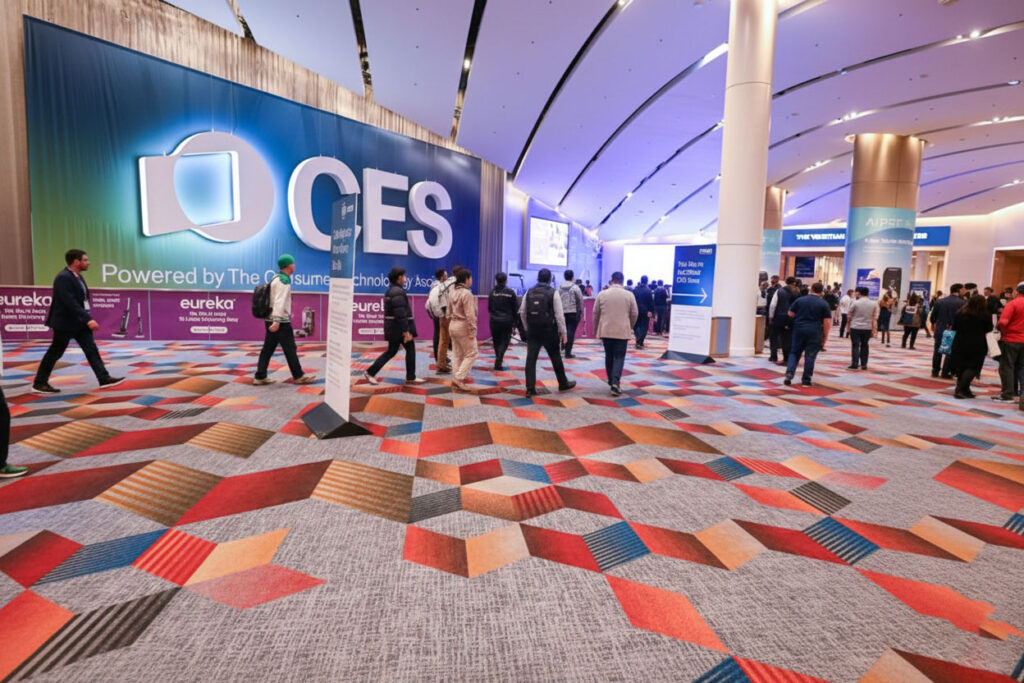
With over 148,000 attendees and nearly 7,000 media representatives, CES 2026 was the largest iteration of the show since the pre-pandemic era. It served as a massive, neon-lit proof of concept for a world where technology no longer just responds to our commands but anticipates our needs, powers our mobility with surgical precision, and manages our health through invisible, non-invasive sensors.
What Is CES?
Definition of Consumer Electronics Show
The Consumer Electronics Show (CES) is an annual trade show organized by the Consumer Technology Association (CTA). Held every January in Las Vegas, Nevada, it is the world’s most influential technology event. Unlike specialized conferences, CES is a “horizontal” show, meaning it covers every facet of the consumer technology ecosystem—from enterprise silicon and autonomous shipping to smart kitchen appliances and wearable health monitors.+2
Why CES is Important in Global Technology
CES is the “North Star” for the global tech industry. It is where the world’s largest companies (Samsung, Sony, Google, NVIDIA) and most ambitious startups congregate to set the agenda for the upcoming year. For analysts, it is a barometer for the global economy; for consumers, it is a sneak peek at the gadgets that will soon occupy their living rooms and pockets.
Role of CES in Innovation and Industry Trends
CES does more than showcase products; it validates entire industries. Whether it was the transition to High-Definition (HD) in the late 90s or the current explosion of Software-Defined Vehicles (SDVs), CES provides the physical space where cross-industry partnerships are forged. A “CES Innovation Award” remains one of the most prestigious accolades a product can receive, often serving as a catalyst for venture capital funding and retail partnerships.+1
The Origin and Journey of CES
Founding of CES (1967)
The first CES took place in June 1967 in New York City. It was a spin-off from the Chicago Music Show and featured just 14 exhibitors, including giants like LG (then GoldStar), Motorola, and Philips. The kickoff speaker was Motorola Chairman Bob Galvin, and the primary focus was on the “next big thing”: pocket radios and televisions with integrated circuits.+1
Early Years and Challenges
In its first decade, CES was a nomad. It moved to Chicago in 1971 and eventually split into two yearly shows: Winter CES (WCES) and Summer CES (SCES). The challenges were many—balancing the needs of retailers with the rapid-fire pace of innovation meant that by the mid-90s, the summer show began to lose steam as the industry moved toward a single, massive annual launch window.
How CES Evolved from Small Electronics to Global Tech Dominance
By 1978, the winter show settled permanently in Las Vegas. Over the next forty years, it transformed from a “stereo and TV show” into a sprawling multi-venue experience. The evolution can be tracked through the types of attendees: what began as a gathering for appliance salesmen became a mandatory summit for Silicon Valley CEOs, world leaders, and automotive executives.
Major Turning Points in CES History
- 1971: The debut of the VCR, changing how the world consumed media.
- 1985: Nintendo’s launch of the NES (as the Advanced Video System), saving the North American gaming industry.
- 2014: The “Automotive Pivot,” where car manufacturers began taking over the North Hall, signaling that cars were becoming “smartphones on wheels.”
How CES Transformed the Tech Industry
Influence on Consumer Electronics
CES forced a cycle of “annualized innovation.” To stay relevant, companies began timing their R&D cycles to the January window. This created a competitive environment where display technologies (OLED, MicroLED) and processor speeds (Moore’s Law in action) were pushed to their limits to win the “Best of Show” headlines.
Impact on Startups, Investors, and Big Tech Companies
The introduction of Eureka Park—a dedicated zone for startups—democratized the event. It allowed a two-person team from a garage in France or a university lab in Seoul to stand in the same spotlight as a trillion-dollar company. For investors, CES is the ultimate “deal floor.” Billions of dollars in contracts and M&A (mergers and acquisitions) activity are initiated in the private meeting rooms of the Wynn and Encore hotels during the show.
CES as a Launchpad for Global Innovations
If a technology appears at CES, it usually reaches the mainstream within three to five years. From the first 3D printers to the rise of the smart home standard Matter, CES acts as the primary filter for what is “vaporware” and what is a viable, market-ready solution.
Major Milestones in CES History
The history of CES is essentially the history of modern life. Here are the breakthrough technologies that were first introduced to the public on the CES floor:
- The VCR (1970/1971): Philips and Sony introduced the first home video recorders.
- The CD Player (1981): A collaboration between Sony and Philips that killed the cassette.
- The DVD (1996): Ushering in the era of digital physical media.
- The Xbox (2001): Microsoft’s entry into the living room, introduced by Bill Gates.
- OLED TV (2008): Sony showcased an 11-inch screen that cost $2,500, paving the way for today’s ultra-thin displays.
- Self-Driving Technology (2014): Audi and Mercedes-Benz demonstrated the first autonomous highway pilots.
- Generative AI Integration (2024): The year AI moved from the cloud to the device.
CES in the Modern Era
Digital Transformation of CES
The 2020s forced CES to rethink its physical-first identity. Following the 2021 all-digital show, the CTA invested heavily in a hybrid model. Today, a global audience of millions watches keynotes via 8K livestreams, while high-ranking executives use AI-powered matchmaking apps to optimize their floor time.
Hybrid and Virtual CES Experiences
CES 2026 mastered the “Phygital” (physical + digital) experience. Augmented Reality (AR) wayfinding apps allowed attendees to navigate the 2.6 million square feet of space, while “Digital Twins” of the exhibit floor allowed remote participants to interact with products in real-time using VR headsets.
Role of AI, Sustainability, and Smart Technologies
Modern CES is no longer just about “more pixels” or “louder sound.” The core pillars now include:
- Human Security for All (HS4A): A partnership with the UN to showcase tech that solves global food, water, and health crises.
- Sustainability: Companies now focus on “circular electronics”—using recycled ocean plastics and cobalt-free batteries.
What Is CES 2026?
Dates: January 6 – 9, 2026 Location: Las Vegas Convention Center (LVCC), Venetian Expo, and ARIA. Theme: “The Age of Agency: Physical AI in a Connected World.”+1
CES 2026 was defined by the move from Chatbots to AI Agents. While 2024 and 2025 focused on AI that could talk to you, 2026 focused on AI that could do things for you—autonomously managing your calendar, driving your car through complex urban environments, and even performing household chores via humanoid robotics.
Key Technologies Expected at CES 2026
Artificial Intelligence & Generative AI (The “Rubin” Era)
The headline of CES 2026 was undoubtedly NVIDIA’s keynote. CEO Jensen Huang unveiled the Rubin platform, a successor to the Blackwell architecture. Rubin represents a 10x reduction in the cost of AI inference, making it possible for every laptop and smartphone to run massive, trillion-parameter models locally without needing the cloud.
- Agentic AI: Software that can execute multi-step tasks (e.g., “Plan a 3-day trip to Tokyo and book everything within my budget”) became a standard feature in Windows 11 and Android 16.
Robotics and Automation
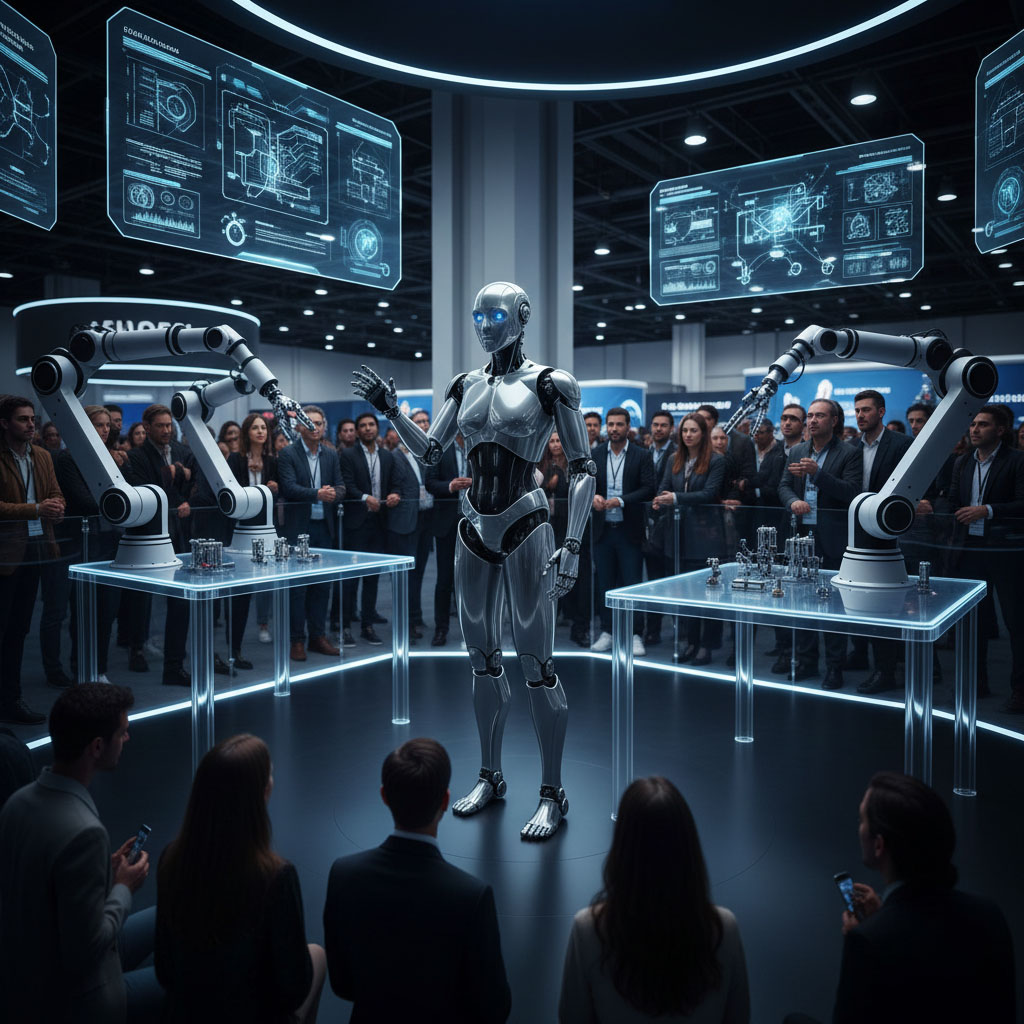
For the first time, Humanoid Robots stole the show from TVs.
- Boston Dynamics showcased the newest iteration of its fully electric Atlas, demonstrating its ability to assist in manufacturing environments and, surprisingly, its gentleness in home-care scenarios.
- Figure and Tesla (Optimus) also had a presence, showing robots that could now navigate uneven terrain and perform fine-motor tasks like folding laundry or sorting mail.
Electric Vehicles & Future Mobility
The West Hall was a symphony of electric motors.
- Mercedes-Benz announced a partnership with NVIDIA to launch the first Level 3 Autonomous production vehicle in the US, allowing drivers to take their eyes off the road on highways.
- Solid-State Batteries: Several startups and major OEMs (Original Equipment Manufacturers) showcased prototype EVs with 600-mile ranges and 5-minute charging times, promising to solve “range anxiety” once and for all.
Smart Homes & IoT
The “Smart Home” has finally become “Intelligent.”
- Matter 2.0: This protocol has solved the interoperability crisis. At CES 2026, we saw Apple, Google, and Amazon devices working in a truly unified ecosystem.
- AI Energy Management: Smart panels like those from Schneider Electric now use AI to automatically switch your home to battery power when grid prices spike, paying for themselves within three years.
Health Tech & Medical Innovation
Health tech moved into the “pre-symptomatic” era.
- Abbott’s Libre Assist: An AI-powered continuous glucose monitor (CGM) that not only tracks sugar but tells you why it spiked and what to eat next.
- Eyebot: An autonomous “kiosk” that provides a full optometry-grade eye exam in 90 seconds without a human technician.
AR, VR, and Spatial Computing
Following the momentum of the Apple Vision Pro, CES 2026 saw the “democratization of spatial computing.”
- Xreal 1S: These AR glasses look like standard Wayfarers but project a 200-inch virtual screen.
- Samsung Display: Showcased the “Mont Flex,” a crease-free foldable screen that effectively turns a phone into a tablet without the visible “line” of previous generations.
Sustainability and Green Technology
“Net Zero” was the buzzword of the year.
- Hydrogen Power: Bosch and Hyundai displayed hydrogen fuel cells for heavy-duty trucking and home backup power.
- Carbon Capture Gadgets: Small-scale devices for the home that filter CO2 and VOCs (volatile organic compounds) while purifying the air.
Major Companies & Startups at CES 2026
Role of Global Tech Giants
The “Big Four” of CES 2026 were NVIDIA, Samsung, Sony, and Intel.
- Intel launched the Core Ultra Series 3 (Panther Lake), the first processors built on the Intel 18A node, bringing unprecedented power efficiency to AI PCs.
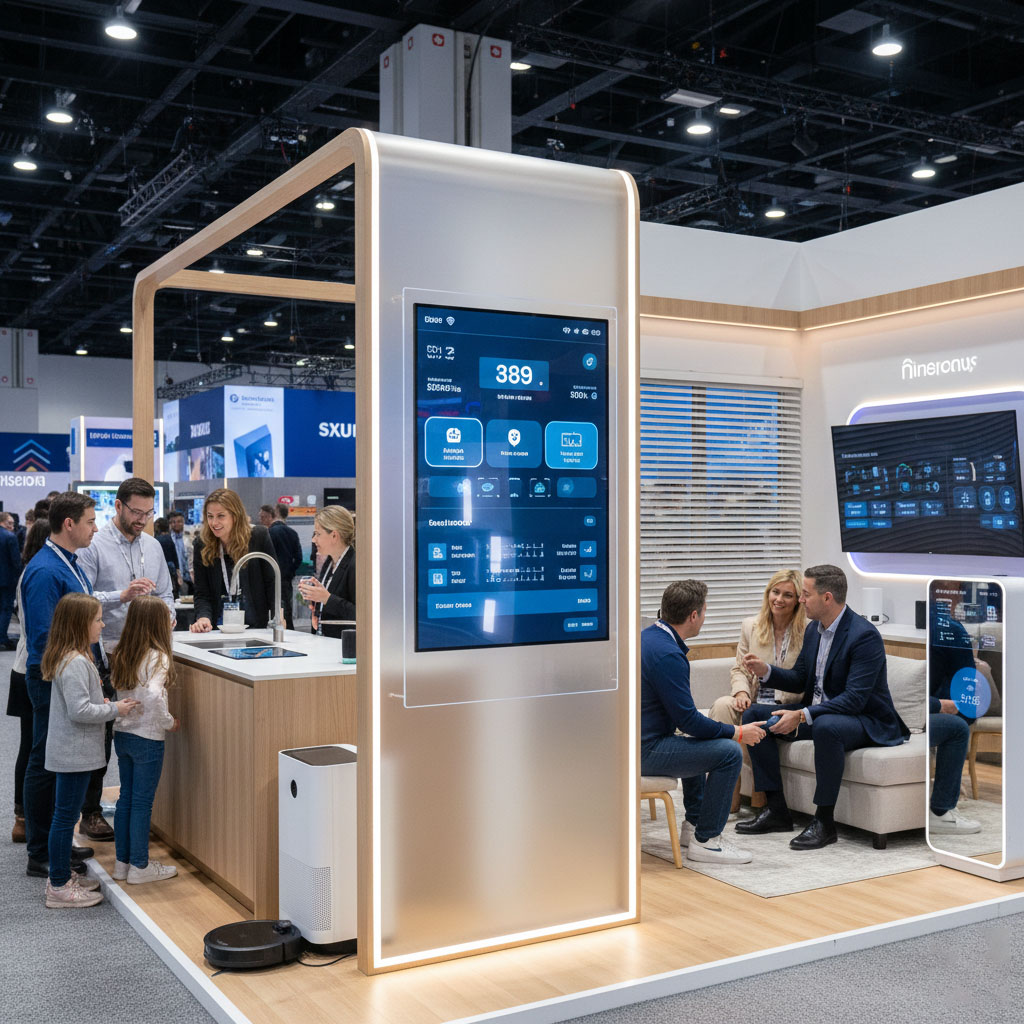
- Samsung transformed its booth into an “AI Life” city, showing how their Galaxy ecosystem connects everything from your fridge to your car.
Importance of Startups and Innovation Zones (Eureka Park)
Eureka Park hosted over 1,500 startups from 40 countries. This year’s standouts included:
- .lumen: A Romanian startup that creates AI glasses for the blind, replacing the need for a guide dog.
- Ascentiz: An exoskeleton company that provides “wearable strength” for warehouse workers to prevent spinal injuries.
How Companies Use CES for Branding and Launches
CES is a high-stakes theater. A single viral demo (like the Lenovo Auto-Twist laptop that rotates its screen to follow your face) can generate millions of dollars in earned media and boost a company’s stock price overnight.
CES 2026 and the Global Economy
Business Impact
The CTA estimated that the total consumer technology revenue in the U.S. alone will hit $565 billion in 2026. CES is the engine room of this growth. The show generates an estimated $300 million+ in non-gaming revenue for the city of Las Vegas through hotel stays, dining, and transportation.
Investment and Partnerships
The “C-Space” at the ARIA hotel saw record attendance from the advertising and marketing world. As AI disrupts traditional search, brands at CES 2026 were looking for new ways to integrate into the “AI Agent” economy, ensuring that when an AI orders groceries for a user, it picks their brand.
Job Creation and Innovation Ecosystems
CES isn’t just about the gadgets; it’s about the labor required to build them. The surge in Advanced Manufacturing and Quantum Computing tracks at the 2026 show highlighted a massive need for a new generation of “AI-fluent” engineers and technicians.
Why CES 2026 Matters for the Future
Influence on Consumer Behavior
CES 2026 marked the end of the “screen-obsessed” era. With the rise of voice-first AI agents and smart glasses, we are seeing a shift toward “Ambient Computing”—where tech is everywhere but doesn’t require us to stare at a hand-held glass slab.
Long-term Technological Roadmap
The technologies debuted here (specifically 18A semiconductors and Level 3 autonomy) set the stage for 2027 and 2028. We are moving toward a world where the distinction between “online” and “offline” disappears.
Predictions Beyond 2026
By 2028, we expect the humanoid robots seen at CES 2026 to be standard in industrial logistics. By 2030, the “Health Mirror” tech (biometric scanning via cameras) will likely be in every bathroom, catching illnesses before we even feel a symptom.
Criticism, Challenges, and Controversies of CES
Despite its success, CES 2026 was not without its detractors:
- Cost and Accessibility: With “Exhibits Plus” passes costing up to $350 and hotel rooms tripling in price, many smaller startups and independent journalists feel priced out of the event.
- Environmental Concerns: The massive carbon footprint of flying 148,000 people to the desert, combined with the waste of elaborate physical booths, remains a point of contention.
- Inclusivity: While the Accessibility Stage was a massive success, the tech industry still struggles with gender and racial representation in C-suite keynote slots.
The Future of CES Beyond 2026
Will CES Remain Relevant?
Yes, but it must evolve. As niche shows like Computex (for hardware) and MWC (for mobile) grow, CES must double down on being the “Show of Shows”—the only place where these disparate industries meet.
How CES May Evolve in the Next Decade
Expect more “experiential” zones. Instead of looking at a car on a pedestal, you will spend your CES in a VR pod that simulates a week in a smart city of 2035.
Predictions for CES 2030 and Beyond
By 2030, CES may no longer be just about consuming electronics. It will likely focus on Biotech, Space Tech, and Climate Tech, reflecting humanity’s most urgent needs.
Conclusion
From its humble beginnings in 1967 with pocket radios, CES has grown into a global titan that dictates the rhythm of human progress. CES 2026 was a landmark year—a year where Artificial Intelligence stopped being a “feature” and became the very foundation of how we live, move, and heal.
As we look back on the innovations unveiled this January, it’s clear that the “future” is no longer a distant destination. It is here, it is intelligent, and it is more connected than ever. CES remains the ultimate global innovation hub, proving year after year that when humanity’s brightest minds gather in the desert, they don’t just predict the future—they build it.
FAQs About CES 2026
What is CES 2026? CES 2026 is the premier global technology event where the latest innovations in AI, robotics, EVs, and consumer electronics were showcased in Las Vegas from January 6 to 9, 2026.
Who can attend CES? CES is a trade-only event for individuals 18 years of age or older who are affiliated with the consumer technology industry. It is not open to the general public, though media and industry analysts attend in high numbers.
Why is CES important? It serves as the global platform for launching breakthrough products and is the primary networking hub for tech executives, investors, and innovators to shape the year’s technological landscape.
What technologies dominated CES 2026? The show was dominated by Agentic AI (autonomous AI assistants), Humanoid Robotics, Level 3 Autonomous Vehicles, and 18A semiconductor architecture.

