
Table of Contents
Welcome to the definitive guide to Resident Evil, the franchise that didn’t just create the survival horror genre—it perfected it. Known in Japan as Biohazard, this series has spent nearly three decades haunting the nightmares of gamers worldwide. From the creaky floorboards of the Spencer Mansion to the shadow-drenched corridors of a Romanian castle, the Resident Evil story is a sprawling epic of corporate greed, biological terror, and the indomitable human spirit.
In this in-depth exploration, we will navigate the dark history of the Umbrella Corporation, trace the evolution of the Resident Evil games, and analyze how this franchise became a multi-billion-dollar pillar of pop culture.
Introduction to Resident Evil
When the original Resident Evil launched in 1996, the gaming landscape changed forever. Before its release, horror in gaming was often campy or limited by technical constraints. Capcom changed the game by introducing a cinematic experience that prioritized atmosphere, resource management, and a genuine sense of vulnerability.
A Brief Overview of the Franchise
The core premise of Resident Evil usually involves a viral outbreak—most famously the T-Virus—created by a shadowy pharmaceutical giant called the Umbrella Corporation. These viruses turn humans into mindless zombies and animals into grotesque bio-organic weapons (B.O.W.s). Throughout the Resident Evil timeline, players take on the roles of various protagonists—police officers, special agents, and even ordinary civilians—as they attempt to survive these outbreaks and expose the conspiracies behind them.
Why Resident Evil is Iconic
What makes iconic is its ability to reinvent itself. It has successfully pivoted from fixed-camera puzzles to over-the-shoulder action, and most recently, to immersive first-person horror. It’s a franchise that survives because it adapts, much like the viruses it depicts. With over 150 million units sold globally, it remains Capcom’s best-selling series and a gold standard for the horror genre.
Third-person shooter gameplay
Resident Evil 4 saw significant changes to the established gameplay, including switching from fixed camera perspectives to a tracking camera, and more action-oriented gameplay and mechanics. This was complemented by an abundance of ammunition and revised aiming and melee mechanics. Some critics claimed that this overhauled control scheme “made the game less scary.”The next two games in the franchise furthered the action-oriented mechanics: Resident Evil 5 featured cooperative play and added strafing, while Resident Evil 6 allowed players to move while aiming and shooting for the first time, fully abandoning the series’ signature tank controls.
First-person shooter gameplay and VR
Resident Evil 7 is the first main Resident Evil game to use the first-person perspective and to use virtual reality. It drew comparisons to modern survival horror games such as Outlast and The eighth main-series game, Resident Evil Village, also features a first-person perspective.A VR version of 4 was released on the Oculus Quest 2 on October 21, 2021.
Origin and Creation of Resident Evil
The story of Resident Evil’s creation is as fascinating as the games themselves. It wasn’t born out of a desire to make a zombie game, but rather a desire to modernize an older title.
Capcom and the Birth of Survival Horror
In the early 90s, Capcom producer Tokuro Fujiwara wanted to create a remake of his 1989 Famicom horror game, Sweet Home. He tasked a young director named Shinji Mikami with the project. Mikami, who initially wasn’t a fan of being scared, took the core mechanics of Sweet Home—the limited inventory, the mansion setting, the puzzle-solving—and translated them into a 3D environment for the newly released PlayStation.+1
It was during the marketing of this game that the term “Survival Horror” was coined. Capcom needed a way to describe this new, slower-paced, high-tension gameplay that focused on surviving rather than just killing.
Inspiration Behind Resident Evil
While Sweet Home provided the mechanical DNA, Western horror cinema provided the aesthetic. Mikami was heavily influenced by George A. Romero’s Night of the Living Dead and Dawn of the Dead. The concept of the “shuffling zombie” became the foundational enemy. Additionally, the claustrophobic atmosphere of Stanley Kubrick’s The Shining influenced the design of the Spencer Mansion, ensuring that every hallway felt like a death trap.+1

Complete Resident Evil Timeline Explained
The Resident Evil timeline is notoriously complex, spanning several decades and multiple continents. However, it can generally be broken down into three major eras.
Umbrella Corporation and T-Virus
The saga begins in the 1960s with the discovery of the Progenitor Virus by Ozwell E. Spencer, James Marcus, and Edward Ashford. They founded the Umbrella Corporation as a front for their biological research. Their goal? To force human evolution. This led to the creation of the T-Virus (Tyrant Virus), which was designed to create the ultimate super-soldier but instead resulted in the zombie outbreaks we know today.
Raccoon City Incident
The most pivotal moment in the series occurs in September 1998. Following a leak in the Arklay Mountains (Resident Evil 1), the T-Virus spread to the nearby Raccoon City. This era (encompassing RE2, RE3, and Outbreak) saw the total collapse of a midwestern American city. The incident ended with the U.S. government launching a nuclear strike to “sanitize” the area, an event that effectively killed Umbrella as a legal entity but scattered its bio-weaponry onto the black market.
Global Bio-Terrorism Era
Post-Raccoon City, the threat went global. No longer confined to one corporation, the “Bio-Organic Weapon” (B.O.W.) market exploded. This era features the rise of various splinter groups, the Los Illuminados cult in Spain (RE4), and the Bioterrorism Security Assessment Alliance (BSAA), an international organization founded by Chris Redfield and Jill Valentine to combat the rising tide of viral outbreaks.
Resident Evil Games Series (Detailed Breakdown)
To understand the franchise, one must look at the games that defined it. Each entry represents a shift in philosophy and technology.
Resident Evil 1 to Resident Evil Village
- Resident Evil (1996): The “Mansion Incident.” Introduced Chris Redfield and Jill Valentine. It established the “Metroidvania” style of exploration where players must find keys and solve puzzles to progress.
- Resident Evil 2 (1998): Expanded the scope to a city-wide disaster. It introduced Leon S. Kennedy and Claire Redfield, utilizing a “Zapping System” that showed two sides of the same story.
- Resident Evil 3: Nemesis (1999): Introduced the concept of a persistent stalker. Nemesis was an intelligent B.O.W. programmed to hunt down S.T.A.R.S. members, creating constant tension.+1
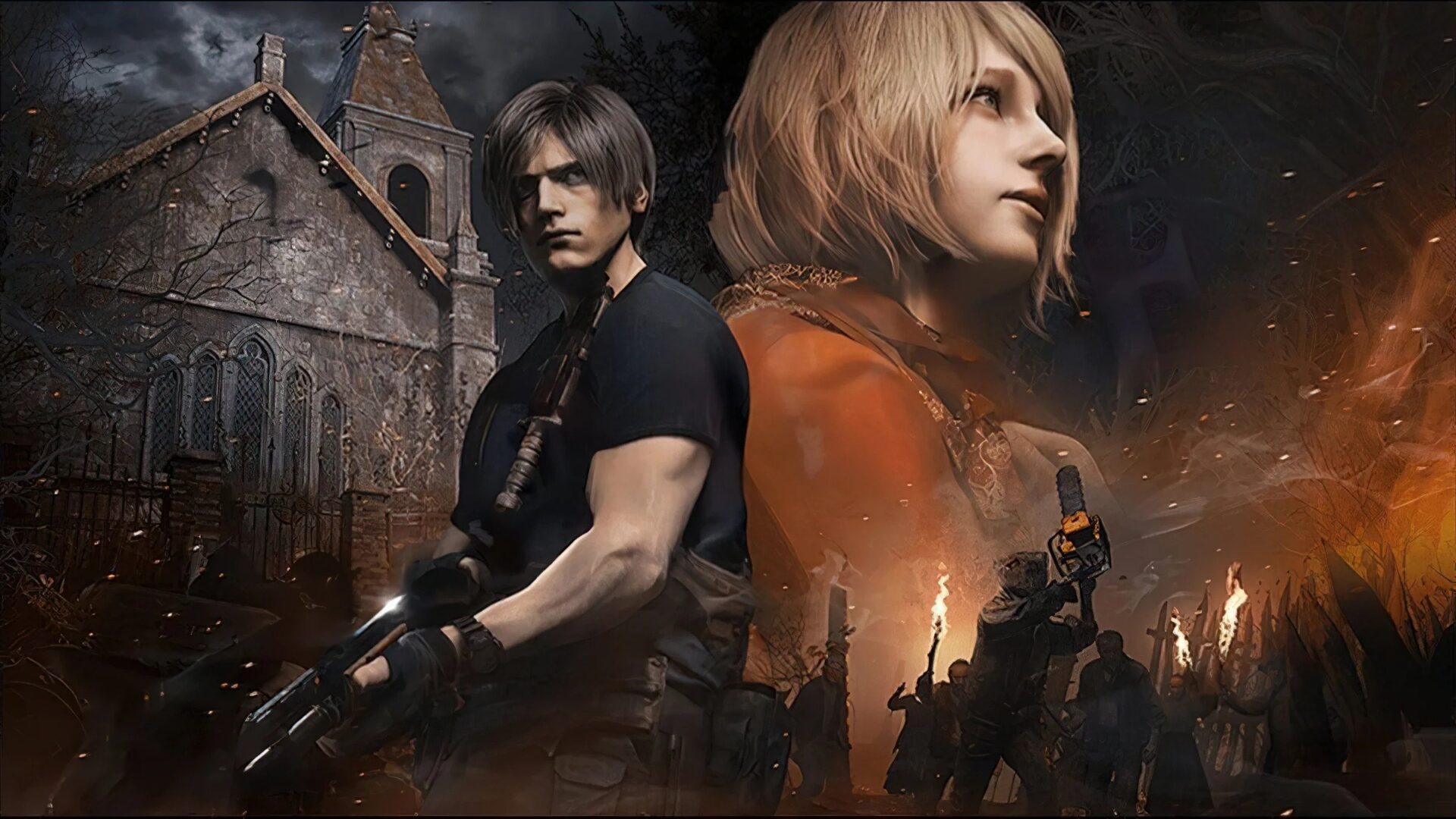
- Resident Evil 4 (2005): A massive departure. It shifted to an over-the-shoulder camera and focused more on action. It is widely considered one of the greatest games of all time, influencing nearly every third-person shooter that followed.
- Resident Evil 5 & 6: These entries leaned heavily into co-op action and global stakes. While commercially successful, they were criticized for losing the “horror” in “survival horror.”
- Resident Evil 7: Biohazard (2017): A soft reboot. It moved the perspective to first-person and returned to the series’ roots of claustrophobia and resource management, introducing the Baker family and new protagonist Ethan Winters.
- Resident Evil Village (2021): A direct sequel to RE7, blending the survival horror of the previous game with the action-adventure pacing of RE4. It introduced the viral sensation Lady Dimitrescu and expanded the lore into more “gothic” territory.
Spin-Off Games
The series has dozens of spin-offs. Some, like Resident Evil Code: Veronica, are considered essential to the plot. Others, like the Chronicles series (on-rail shooters) or Operation Raccoon City (squad-based shooter), explore different genres entirely.
Remakes and Remasters
Capcom has set the industry standard for remakes. The Remake (2019) and Resident Evil 4 Remake (2023) are not just HD updates; they are complete ground-up reimaginings that modernize the gameplay while respecting the original atmosphere.
Main Characters of Resident Evil
The heart of the Resident Evil characters roster lies in its recurring protagonists. These are the survivors who have grown from rookies into battle-hardened veterans.
Leon S. Kennedy
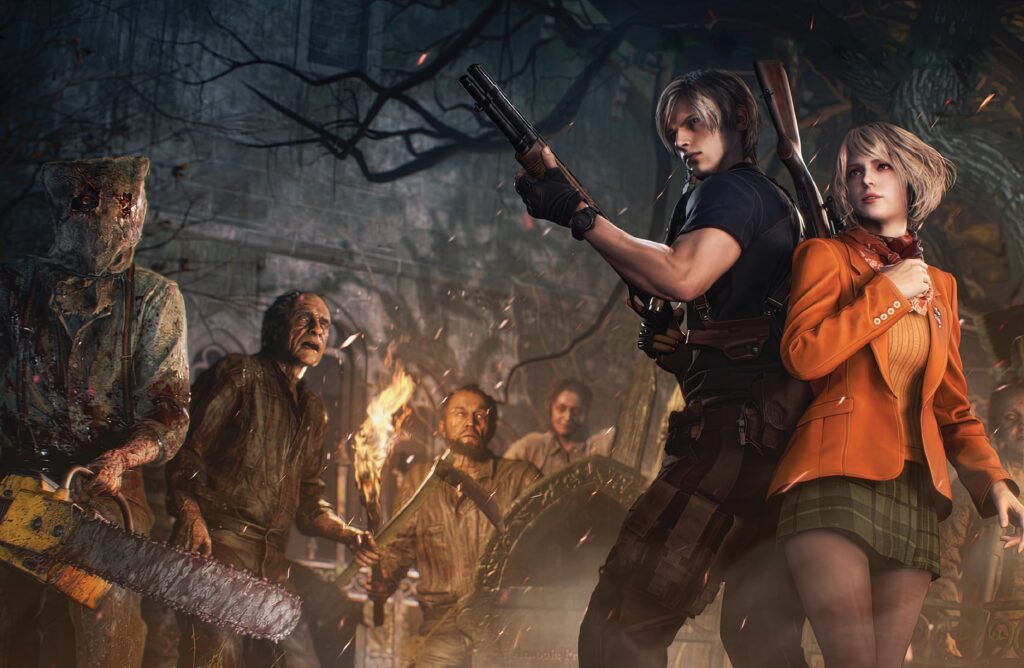
Starting as a rookie cop on his worst first day ever in RE2, Leon evolved into a high-level government agent in RE4. He is known for his cool-headedness, his trademark hair, and his complicated relationship with the spy Ada Wong.+1
Chris Redfield
A former Air Force pilot and S.T.A.R.S. member, Chris is the series’ primary “soldier.” His journey is defined by his personal vendetta against Albert Wesker and his commitment to wiping bio-weapons off the face of the earth.
Jill Valentine
The “Master of Unlocking,” Jill is an expert in explosives and survival. Her encounters with Nemesis and her later brainwashing by Wesker in RE5 make her one of the most resilient and complex characters in the lore.
Claire Redfield
Unlike the others, Claire isn’t military. She’s a civilian motivated by the search for her brother, Chris. Her empathy and protective nature—especially toward children like Sherry Birkin—make her a fan favorite.
Albert Wesker
The ultimate antagonist. A double agent with a god complex, Wesker’s betrayal of S.T.A.R.S. in the first game set the entire series in motion. With his superhuman speed and permanent sunglasses, he remains one of gaming’s most iconic villains.+1
Villains and Bio-Weapons (B.O.W.s)
In Resident Evil, the enemies are often as famous as the heroes. The diversity of mutations is what keeps the combat fresh.
Zombies, Tyrants & Mutations
The Zombie is the baseline, but the series quickly introduces more lethal threats. Tyrants are the ultimate expression of the T-Virus: towering, invincible soldiers designed for assassination. Later games introduced the Las Plagas parasites, which allowed enemies to use weapons and communicate, making them far more dangerous than mindless ghouls.+1
Nemesis and Other Iconic Enemies
- Nemesis: An upgraded Tyrant with a rocket launcher and a single-minded goal.
- The Licker: A skinless mutation that navigates ceilings and hears the player’s every footstep.
- Mr. X (T-00): The trench-coat-wearing juggernaut that stalks players through the RPD in the RE2 Remake.
Resident Evil Movies & TV Series
Resident Evil’s success isn’t limited to consoles. It has a massive, though polarizing, presence in film.
Live-Action Movies Overview
Directed largely by Paul W.S. Anderson and starring Milla Jovovich as Alice, these films were massive box-office hits but deviated significantly from the games. They focused more on high-octane action than survival horror. In 2021, Welcome to Raccoon City attempted a more faithful adaptation, though it received mixed reviews from fans.+1
Animated Movies
For fans of the game lore, the CGI movies—Degeneration, Damnation, Vendetta, and Death Island—are considered canon. They feature the game’s actual voice actors and fill in gaps in the Resident Evil timeline.
Netflix Resident Evil Series
Netflix released a live-action series in 2022 and an animated miniseries, Infinite Darkness. While Infinite Darkness followed Leon and Claire, the live-action series took a bold, experimental approach that was eventually canceled after one season due to poor reception.
Gameplay Evolution and Technology
Resident Evil has always been at the forefront of technical innovation in the gaming industry.
Fixed Camera to First-Person Horror
The early games used Fixed Camera Angles. This wasn’t just a technical limitation; it was a stylistic choice that allowed developers to hide enemies just out of sight, creating a sense of dread. The jump to First-Person in RE7 was a response to the VR revolution, making the horror more intimate and inescapable than ever before.
RE Engine and Graphics Evolution
Capcom’s proprietary RE Engine (introduced with RE7) is a marvel of modern software. It uses photogrammetry—scanning real-world objects and people—to create hyper-realistic textures. This engine has allowed the series to achieve a level of visual fidelity that makes the gore and monsters look disturbingly real.+1
Resident Evil’s Impact on Gaming Industry
You cannot discuss modern gaming without acknowledging Resident Evil’s shadow.
Survival Horror Genre Influence
Before 1996, “horror” was a niche subgenre. Resident Evil proved that horror could be a AAA, mainstream blockbuster. It paved the way for other legendary series like Silent Hill, Dead Space, and The Last of Us. The “resource management” loop (deciding whether to use your last bullet or run) is now a staple of game design.
Cultural and Commercial Success
The franchise has crossed over into music, fashion, and even theme park attractions at Universal Studios. Its ability to sell millions of copies across multiple console generations proves that the “fear of the unknown” is a universal language.
Fanbase, Community & Esports Influence
The Resident Evil community is one of the most dedicated in gaming. While it isn’t a traditional “Esport,” the Speedrunning community for is massive. Players compete to finish the games in under an hour, using glitches and optimized routes. Capcom has embraced this, often including “speedrun” challenges and timers in their games.
There is also a vibrant “Modding” community, especially for the PC versions. Whether it’s replacing Mr. X with Thomas the Tank Engine or creating high-definition texture packs for older titles, fans keep the legacy alive.
Future of Resident Evil Franchise
What lies ahead for the series? If the current trend is any indication, the future is bright—and bloody.
Upcoming Games & Rumors
Rumors are swirling about Resident Evil 9, which is whispered to be an open-world or semi-open-world experience. There is also heavy demand for a remake of Resident Evil: Code Veronica or the original in the RE Engine style.
Capcom’s Vision
Capcom has stated they intend to continue their dual strategy: releasing groundbreaking new entries while simultaneously remaking classic titles to bring them to a modern audience. They have found a perfect rhythm that satisfies both “boomer” fans of the originals and new players.
Conclusion
Resident Evil remains relevant because it understands the core of human fear. It’s not just about the jump scares; it’s about the tension of a ticking clock, the click of an empty magazine, and the mystery of what lies behind a locked door.
From its humble beginnings in a Japanese studio to its status as a global entertainment juggernaut, the series has survived the test of time. Whether you are a veteran who remembers the first time a dog jumped through a window in 1996 or a newcomer who just survived the Baker estate, we are all united by the same chilling thrill. The Umbrella Corporation may fall, but the legacy of Resident Evil is immortal.

